
Picking your first eyeshadow is harder than it should be. Walk into any beauty aisle and you’re staring at walls of palettes, singles, creams, and glitters with no clear starting point. The truth is that your first eyeshadow matters less than your technique, but the right formula does make learning significantly easier.
This guide covers the specific products that are most forgiving for beginners, the tools worth buying (and which ones are a waste of money early on), and a true step-by-step process that builds real skill.
This page is the formula-first sibling: pressed powder vs cream, and a three-shade process. The complete starter kit covers what to buy. The 5-zone application order is the placement walkthrough. All three URLs stay live.
Choosing Your First Eyeshadow: What Actually Matters
Formula Type: Start With Pressed Powder
Eyeshadow comes in pressed powder, loose powder, cream, and liquid forms. For beginners, pressed powder is the clear winner. It’s the easiest to control, the most blendable, and the most forgiving when you make mistakes. You can build it up gradually or sheer it out, which is much harder to do with cream or liquid formulas.
Cream shadows look effortless on beauty influencers, but they dry quickly and become hard to blend once set. That’s a frustration you don’t need while learning.
Finish: Matte First, Shimmer Second
Matte eyeshadows are your best friend as a beginner. They blend smoothly, they don’t highlight texture on the lid, and they look natural even if your placement isn’t perfect. Shimmer shades are beautiful, but they tend to emphasize any unevenness and they’re less forgiving in the crease.
Start with mostly matte shades. Once you’re comfortable with placement and blending, add shimmer to the center of the lid for a pop of dimension.
Color: Stay Neutral to Start
Resist the urge to grab that rainbow palette. Neutral shades in warm or cool tones (depending on your skin’s undertone) are the most wearable and the easiest to learn with. Browns, taupes, soft pinks, and peaches work on virtually every skin tone and eye color.
The Best Beginner Eyeshadow Products
Best Starter Palette: NYX Professional Makeup Ultimate Shadow Palette
NYX Ultimate Shadow Palette in Warm Neutrals (~$18) gives you 16 shades with a balanced mix of matte and shimmer. The formula is buttery without being too powdery, and the shade organization naturally guides you from light to dark. At this price, you can practice without guilt.
Beauty Desk listing check: Confirm the Warm Neutrals edition, not Brights. This is a 16-pan palette, not a Bite-Size quad. Prefer new, sealed stock.
Best Budget Option: e.l.f. Bite-Size Eyeshadow Quad
e.l.f. Bite-Size Eyeshadow in Cream & Sugar (~$3) is the lowest-risk way to start. Four coordinated shades that work together, so you can’t really make a bad color combination. The small size actually helps, fewer options means less overthinking.
Best Mid-Range: Anastasia Beverly Hills Soft Glam Palette
ABH Soft Glam (~$45) costs more, but the formula quality is noticeably better. The mattes blend almost effortlessly, which compensates for beginner technique. If your budget allows it, this palette teaches good habits because the shadows respond exactly how they should.
Must-Have Primer
e.l.f. Shadow Lock Eyelid Primer (~$8) creates a smooth, even base that keeps shadow in place all day. Apply a thin layer, wait about 30 seconds for it to set, then start your eyeshadow. This single step prevents the creasing and fading that makes beginners think they’re doing something wrong.
Essential Tools: The Only Brushes You Need
You don’t need a 15-piece brush set. You need two brushes and your fingertip.
1. Flat Shader Brush — for pressing color onto the lid. The flat shape picks up product efficiently and deposits it evenly. Real Techniques Shade + Blend Eye Brush Set (~$10) includes both brushes you need.
2. Fluffy Dome Blending Brush — for softening edges in the crease and diffusing harsh lines. This is the brush that makes everything look seamless. Use light, windshield-wiper motions.
3. Your Fingertip — for shimmer shades on the center of the lid. Fingers deposit shimmer more intensely than brushes and warm the product for better adhesion.
For a deeper dive into brush types and what each one does, check out our complete eyeshadow brush guide.
Step-by-Step: Your First Eyeshadow Look
This is a simple three-shade neutral eye that works for any occasion. Practice this until it feels automatic before attempting anything more complex.
Step 1: Prime Your Lids
Squeeze a rice-grain-sized amount of primer onto your ring finger and pat it across the entire lid, from lash line to brow bone. Wait 30 seconds.
Why this matters: Primer creates a tacky surface that grabs pigment, evens out your skin tone on the lid, and prevents creasing. Skip this and your shadow will slide around and disappear within hours. For more on keeping shadow in place, see our guide on how to make eyeshadow last all day.
Step 2: Apply a Transition Shade to the Crease
Pick a matte shade that’s 2-3 shades darker than your skin tone, something like a soft taupe, warm brown, or muted peach.
Load your fluffy blending brush, tap off excess, and sweep it back and forth in your crease (the fold above your eyelid). Keep the motions small and controlled. You want a soft wash of color, not a heavy stripe.
Tip: Hold the brush at the very end of the handle. This naturally limits how much pressure you apply and produces softer blending.
Step 3: Pack Color on the Lid
Choose a slightly darker matte shade or a shimmer in a complementary tone. Using the flat shader brush, press (don’t drag) the shadow onto the center of your lid, then work outward toward the outer corner and inward toward the inner corner.
The pressing motion is key. Dragging pushes pigment around and creates patchiness. Pressing deposits it cleanly.
Step 4: Define the Outer Corner
Take a slightly deeper shade on a small brush (or the tip of your fluffy brush) and concentrate it on the outer V — the small triangular area where your crease meets your upper lash line at the outer corner.
Blend inward with small circular motions. This adds depth and dimension without making the whole eye look heavy.
Step 5: Highlight the Inner Corner and Brow Bone
Use a light shimmer shade or a matte shade close to your skin tone on the inner corner of the eye and just beneath the brow bone. This brightens the overall look and creates contrast against the deeper shades.
Step 6: Clean Up and Blend
Take a clean fluffy brush (no product on it) and go over the entire eye. Soften any harsh lines. If your crease shade looks too strong, this step dials it back. This is the difference between “I tried eyeshadow” and “my eye makeup looks polished.”
Step 7: Finish With Mascara
One to two coats of mascara ties the whole look together. Wiggle the wand at the base of your lashes and sweep upward.
Common Beginner Mistakes and How to Fix Them
Too Much Product on the Brush
This is the number-one beginner error. After loading your brush, tap it firmly on the back of your hand two to three times. The shadow should look subtle on the brush. You can always build up more, but removing excess from your lid is messy and frustrating.
Not Blending Enough
If you can see a defined line where your crease color starts and stops, you haven’t blended enough. Go back with a clean fluffy brush and keep working it. Blending takes longer than you think, sometimes 30-60 seconds of just back-and-forth motions.
Matching Your Eyeshadow to Your Outfit
This feels intuitive but almost always looks dated. Instead, match your eyeshadow to your eye color or skin undertone. Check out our eyeshadow color theory guide for specific pairings that work.
Applying Shimmer With a Brush in the Crease
Shimmer belongs on the lid and inner corner. In the crease, it catches light in a way that makes the area look puffy rather than defined. Keep crease work strictly matte.
Building From Here
Once this basic three-shade look feels comfortable, you’re ready to explore more techniques:
- Cut crease — a dramatic technique where the crease color has a sharp, clean edge rather than a blended one. See our cut crease tutorial for the full method.
- Color exploration — once your blending is solid, experiment with color. Warm coppers, dusty roses, and olive greens are the easiest “non-neutral” shades to start with.
- Eyeliner integration — adding liner after eyeshadow creates a more polished look. Start with a smudged pencil liner along the upper lash line before graduating to liquid.
The key is patience. Every makeup artist started with the same awkward first attempts. The difference between a beginner and someone who’s “good at eyeshadow” is just repetition and a willingness to keep blending until it’s right.
Our Rigorous Testing & Review Methodology
At eyeshadowlooks.net, we take our responsibility to our readers seriously. We believe that to provide the best possible recommendations, we must adhere to a structured research methodology built on extensive industry sources.
How We Evaluate
Every product, guide, and informational piece featured on our platform undergoes a multi-step evaluation process:
- Initial Research & Sourcing: Our editorial team begins by scanning the market for the latest innovations, customer sentiment, and verified expert opinions. We actively avoid relying solely on manufacturer claims, choosing instead to cross-reference published formulation data and real-world user feedback from verified buyers. The Beauty Desk does not run an in-house lab or a test fleet.
- Specification & Feedback Analysis: We analyze manufacturer specifications, published formula and ingredient documentation, and aggregated feedback from verified buyers to assess durability, ease of use, and long-term value.
- Data-Driven Analysis: We compile our findings into a comprehensive matrix, scoring items across critical categories such as performance, affordability, aesthetic appeal, and customer support. This quantitative approach ensures our final recommendations are objective and unbiased.
- Continuous Monitoring: The market is always changing. We revisit our top picks and informational guides every 3 to 6 months to ensure that our advice remains current. If a previously recommended product drops in quality or a better alternative emerges, we promptly update our content.
Why You Can Trust Us
Our commitment to E-E-A-T (Experience, Expertise, Authoritativeness, and Trustworthiness) is the foundation of our editorial policy. We do not accept paid placements for our top recommendations. Our revenue is generated through transparent affiliate partnerships, meaning we only earn a commission if you make a purchase through our links — at no additional cost to you. This structure aligns our success directly with your satisfaction.
Our editorial team researches products using manufacturer specifications, published formulation data, and aggregated feedback from verified buyers. We mandate that all claims are backed by authoritative sources, which we link to whenever applicable.
If you ever have questions about our methodology or spot an inaccuracy, we encourage you to reach out via our Contact page. We are dedicated to continuous improvement and always welcome community feedback to refine our editorial standards.
Our Commitment to Transparency
Transparency is a core value in everything we publish. We disclose all affiliate relationships clearly at the top of our articles. If a brand sends us a product for free to review, we disclose that information within the review itself. However, accepting a free product never guarantees a positive review. Our allegiance is strictly to our readers. We regularly publish cautionary reviews for products that fail to meet our high standards, regardless of the brand’s industry standing or potential commission rates.
Frequency of Updates
We recognize that information becomes outdated quickly. Therefore, our team conducts quarterly audits of our most popular guides and reviews. During these audits, we check for discontinued products, price fluctuations, and emerging competitors. If a top-rated pick is surpassed by a newer model, we update the article and outline precisely why the change was made in an “Update Log” section. This dedication to freshness ensures that whenever you land on one of our pages, you are reading the most accurate and up-to-date information available.
Get weekly eye care & beauty tips
Guides from the Eyeshadow Looks Beauty Desk. No spam, ever.
Frequently Asked Questions
What is the easiest type of eyeshadow for beginners?
Pressed powder eyeshadow in matte finishes is the most forgiving for beginners. Matte formulas blend more easily, hide mistakes better, and don't emphasize skin texture. Cream shadows can also work but tend to crease faster without primer. Start with powder mattes, then add shimmer and cream formulas once your blending technique improves.
How many eyeshadow shades do beginners actually need?
Three shades are enough to create most everyday looks: a light base shade, a mid-tone crease color, and a deeper shade for the outer corner. Many beginners buy large palettes and feel overwhelmed. A small quad or trio palette forces you to learn blending and placement without decision paralysis.
Should beginners use eyeshadow primer?
Yes. Primer is one of the few non-negotiable steps for beginners. Without it, shadow creases and fades within a couple of hours on most lid types, which makes you think your technique is wrong when it's actually a prep problem. A budget primer like the e.l.f. Shadow Lock Eyelid Primer works perfectly.
What eyeshadow brushes should a beginner buy first?
Start with two brushes: a flat shader brush for packing color onto the lid and a fluffy dome blending brush for softening edges in the crease. You can do every beginner look with just these two. Add a smaller pencil brush later when you want more precise outer-corner work.
Is drugstore eyeshadow good enough for beginners?
Absolutely. Drugstore formulas have improved dramatically. Brands like NYX, e.l.f., and Milani produce shadows that rival mid-range brands in pigmentation and blendability. Starting with affordable options also means less pressure, you can experiment freely without worrying about wasting expensive product.
Related Articles
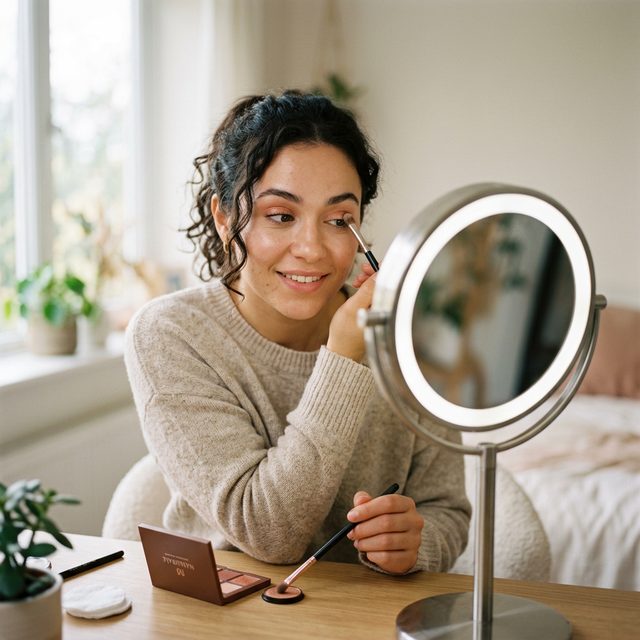 tutorials
 Eyeshadow for Beginners: The Complete Starter Guide
Read Guide arrow_right_alt tutorials
 How to Apply Eyeshadow for Beginners: Step-by-Step Guide (With Pictures)
Read Guide arrow_right_alt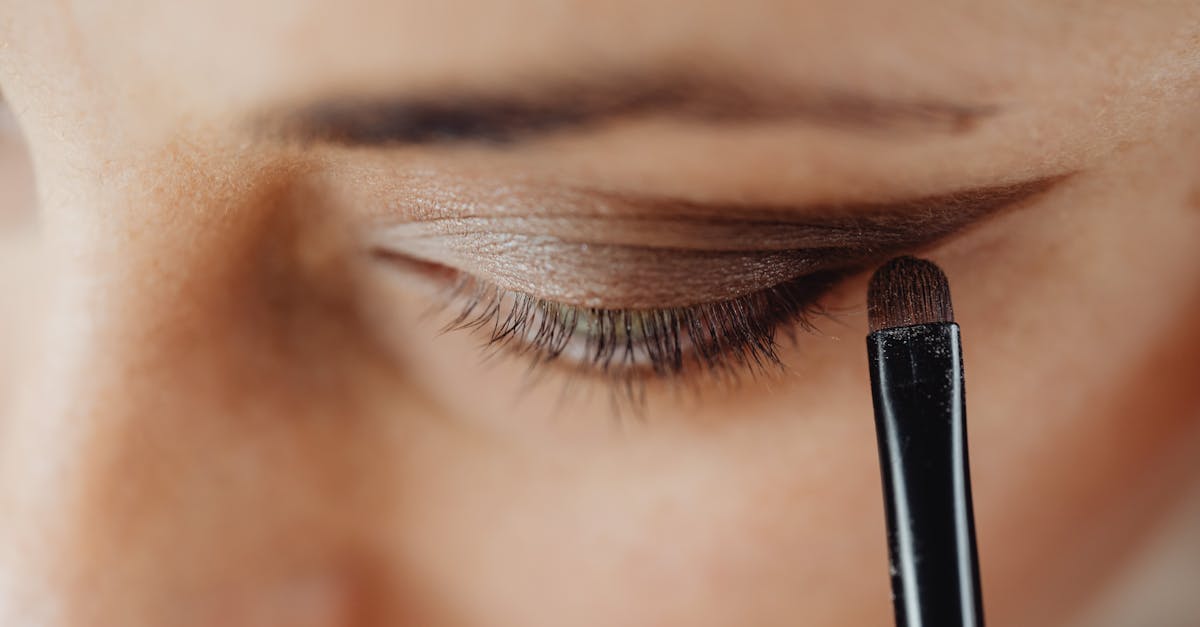 tutorials
 Smokey Eye Tutorial: Step by Step for Beginners
Read Guide arrow_right_alt tutorials
 Smokey Eye Tutorial for Beginners: A Foolproof Method
Read Guide arrow_right_alt tutorials
 Smokey Eye Tutorial for Brown Eyes: Colors and Steps That Actually Flatter
Read Guide arrow_right_alt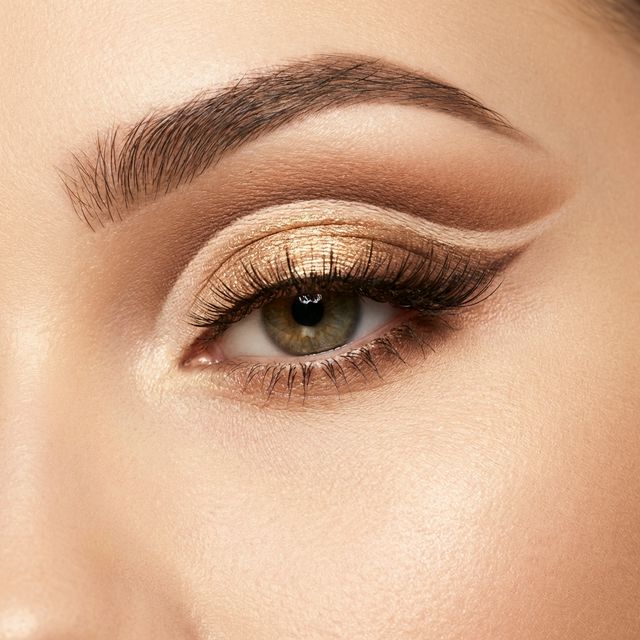 tutorials