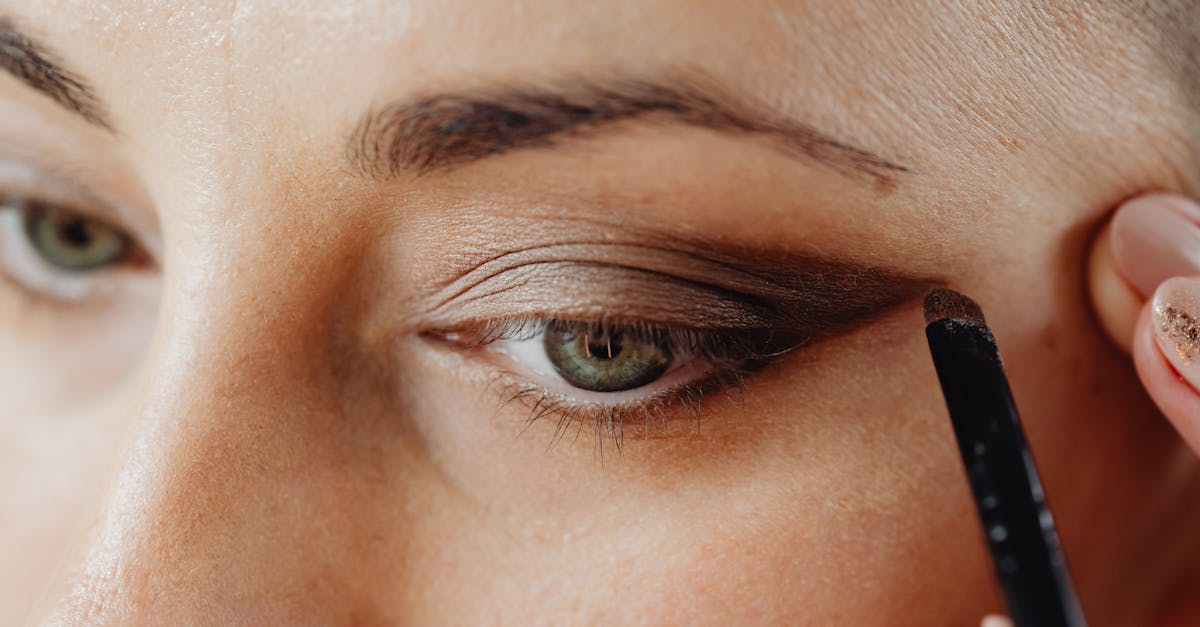
Deep-set eyes are characterized by a prominent brow bone and eye sockets that sit further back in the skull relative to the brow. This creates a natural shadow cast over the lid, which can look dramatic and striking, but can also make eyes appear smaller or heavier if you don’t account for the anatomy when applying makeup.
The goal with deep-set eye techniques: use light and color to bring the eye forward and counteract the natural shadows.
The Deep-Set Eye Challenge
The brow bone juts forward and casts a shadow over the mobile lid. This shadow has two visual effects:
- It darkens the lid, which can make any color you apply look deeper and heavier than intended
- It can cause the crease to appear as a strong dark line, rather than a soft transition
Standard crease-depth work that looks beautiful on other eye shapes can deepen these shadows rather than adding dimension.
Core Strategy: Light on Lid, Keep Crease Soft
The central principle for deep-set eye makeup is the reverse of most standard guidance: put your lightest or most reflective shade on the lid, and keep crease work soft rather than deep.
Standard wisdom: dark crease, lighter lid → depth and dimension
Deep-set adjustment: light/medium lid, softened crease → opens and brings forward
Step-by-Step: The Flattering Deep-Set Eye Look
Step 1: Apply primer and translucent powder Particularly important here because cream or oily formulas settling into the natural crease shadow will emphasize it. A dry, well-primed base keeps everything clean.
Step 2: Apply a light base shadow Sweep a light, warm neutral matte (not stark white, think soft ivory, light taupe, or matte champagne) across the entire lid from lash line to brow bone. This neutralizes any skin discoloration and provides uniform base color.
Step 3: Place shimmer or satin on the lid Choose a reflective or satin shade, champagne, rose gold, warm pearl, and apply it with a flat shader brush to the mobile lid (from lash line to very slightly above the crease). The reflective quality bounces light forward, visually advancing the eye.
Step 4: Blend a transition shade softly in the crease Use a medium taupe, soft brown, or dusty mauve, nothing too dark, with a large fluffy brush. Work it in windshield-wiper motions, keeping the color diffused rather than concentrated. The crease color should be a soft transition, not a bold definition.
Step 5: Concentrate lighter color at the center lid For extra dimension, apply your lightest or most reflective shade at the very center of the lid only, with a small shader brush. This center emphasis creates a subtle halo effect that brings the eye forward even more.
Step 6: Open the inner corner and brow bone Apply a pale matte or soft shimmer highlight to the inner corner of the lid (right at the tear duct) and along the brow bone. These placements counteract the natural shadow cast by the brow ridge.
Step 7: Handle liner strategically Upper lash line liner, applied thin: excellent. Avoid thick liner that weighs down the lid. Lower waterline: use a white or nude liner, not dark. This is one of the highest-impact steps for opening deep-set eyes.
Step 8: Curl lashes and focus mascara upward Well-curled lashes that point upward help counteract the brow’s shadow and direct the eye upward. Use a curler, apply mascara from roots to tips with an upward flicking motion.
What to Avoid
Dark shimmer on the lid: Defeats the purpose, you need to advance the eye forward, not deepen the shadow.
Very deep or dark crease work: Heavy crease depth makes deep-set eyes look more shadowed, more sunken, and heavier.
Heavy lower liner on the waterline: Dark liner encircling the eye closes it significantly and emphasizes the deep-set shadow.
Matching the lid shade to the orbital shadow: If the lid color is similar in value to the natural shadow, the eye disappears optically.
Quick Reference
| Zone | Best Approach | Avoid |
|---|---|---|
| Lid | Light/reflective shimmer or satin | Dark matte or deep metallics |
| Crease | Soft, diffused medium neutral | Heavy deep definition |
| Inner corner | Pale highlight or white shimmer | Dark shades |
| Brow bone | Soft pale matte highlight | Heavy saturation |
| Upper lash line | Thin liner OK | Thick or heavy liner |
| Lower waterline | White or nude pencil | Dark liner |
Celebrities with Deep-Set Eyes for Reference
Deep-set eyes are associated with a distinctive, striking look when enhanced well. Notable examples include Jennifer Aniston and Scarlett Johansson, both of whom consistently use lighter lid colors and well-curled, improved lashes in their signature makeup looks.
Sources
- Robidoux, A. et al. (2019). “Periorbital Anatomy and Its Relevance to Oculoplastic Surgery.” Clinics in Plastic Surgery, 46(3), 329–341.
- Aucoin, Kevyn. Face Forward. Little, Brown, 2000, orbital depth correction techniques for deep-set eyes
- Harper’s Bazaar. (2025). “The Best Eye Makeup Tricks for Deep-Set Eyes.” harpersbazaar.com.
Related Guides
- Eyeshadow Placement Guide: Where to Apply Every Shade
- Hooded Eyes Eyeshadow: Techniques That Actually Show Up
- Monolid Eye Makeup: Step-by-Step Techniques That Work
- Eyeshadow for Mature Eyes: Techniques for Deeper Lids
Highlight Placement for Deep-Set Eyes
Beyond foundational shadow placement, strategic highlight placement transforms deep-set eye looks.
Brow bone highlight: A matte or subtle shimmer highlight directly under the brow arch (on the brow bone) is essential for deep-set eyes. It physically brightens the most recessed area and provides contrast against the brow. Use a shade 2-3 tones lighter than your skin tone, not pure white, white can look harsh.
Inner corner highlight: Applied at the inner corner of the eye, a small press of shimmer (done after the rest of your eye makeup) catches light at the closest point to the nose bridge and creates visual depth contrast with the recessed lid.
Waterline highlight: Nude or white waterline liner on the lower waterline makes the lower part of the eye appear more open. The effect is subtle but cumulative, combined with brow bone and inner corner highlights, the eye reads as significantly more forward.
Sources
- Face Forward, Kevin Aucoin (London: Little, Brown, 2000)
- Makeup Artist Magazine, “Techniques for Deep-Set Eyes” (2022)
- American Academy of Ophthalmology, Anatomical variations in periorbital structure
We evaluate beauty products and techniques independently. To learn more about our editorial standards, read our Editorial Policy.
Get weekly eye care & beauty tips
Guides from the Eyeshadow Looks Beauty Desk. No spam, ever.
Frequently Asked Questions
What is the best eyeshadow for deep-set eyes?
Light, reflective shades on the lid are the foundation of deep-set eye makeup. Deep-set eyes sit in natural shadow, so placing a light shimmer or satin shade on the lid counteracts that shadow and brings the eye forward visually. Avoid very dark lid coverage, it deepens the shadow rather than offsetting it.
Should deep-set eyes use eyeliner?
Yes, but with consideration. Upper lash line liner defines the eye without adding heaviness. Avoid applying heavy dark liner all around the eye, it deepens the appearance and can make the eye look even more recessed. White or nude liner on the lower waterline is particularly effective for opening deep-set eyes.
Do deep-set eyes age well?
Deep-set eyes with prominent brow ridges often show fewer signs of eyelid drooping because the anatomy offers more structural support. However, the orbital hollow (under-eye shadowing) can become more pronounced with age. Eye cream and concealer remain important in overall deep-set eye care.