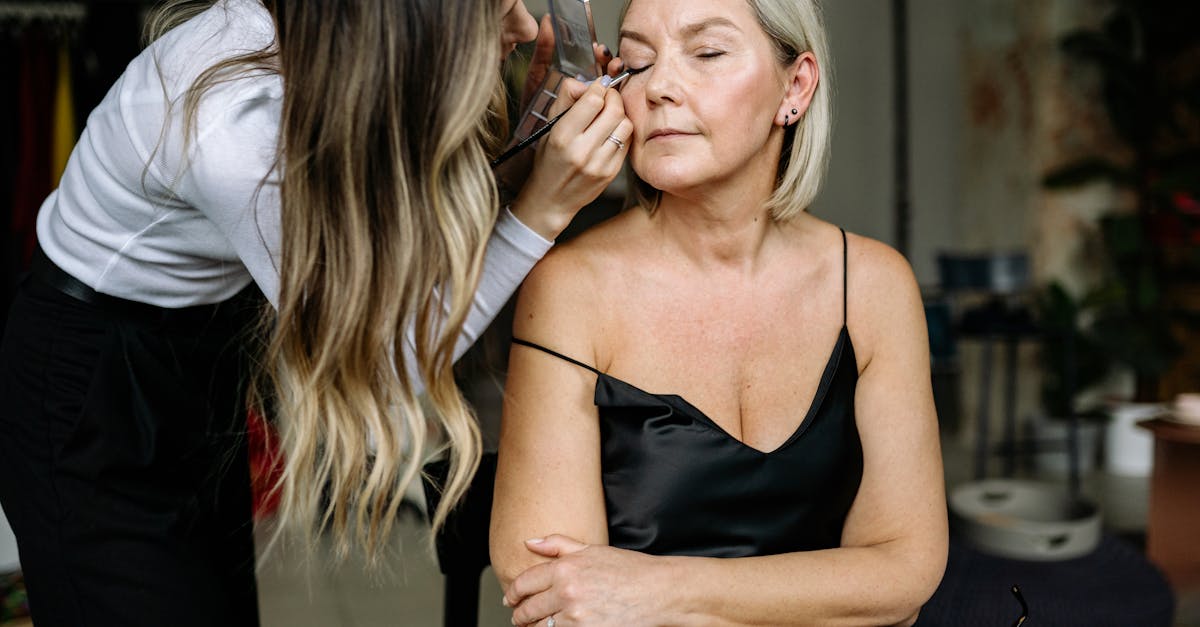
As skin ages, the eyelid changes structurally. Collagen breaks down, the skin thins and becomes more translucent, fat redistributes, the brow drops slightly, and the fold of the hooded lid becomes more prominent. These changes mean that techniques and formulas designed for younger skin often need adjustment, not because mature eyes can’t wear beautiful makeup, but because the canvas is simply different.
The goal is adapting your technique to what’s physically happening, not abandoning color and artistry.
This page is the technique sibling for aging lids: lift, satin vs glitter, and what to skip. Product and formula picks for 50+ live on eyeshadow for mature eyes over 50. Both URLs stay live.
What Changes with Aging Eyelids
Understanding the physical changes helps explain the technique adjustments:
Thinning skin: Mature under-eye and lid skin is more translucent. Veins show through more prominently. Texture, fine lines, pores, crepey texture, becomes more visible.
Hood development: Many women develop more prominent hooded eyelids as the brow drops and the skin of the upper lid relaxes downward. This changes where you can see applied shadow.
Loss of crease definition: The crease may become less defined or move to a different position than where you’re accustomed to placing shadow.
Dry skin: Mature skin tends to be drier. Formulas with oils and emollients can look good in application but migrate more easily.
Formula Rules for Mature Eyelids
What Works Best
Fine-milled pressed powder: The most consistently reliable formula. Set properly, it doesn’t migrate into fine lines, allows blending, and stays where you put it. This is the foundation of most mature-skin-friendly eye looks.
Cream shadow used as a base (not on its own): A thin cream shadow applied and quickly set with pressed powder extends wear and improves color payoff, without the migration risk of cream worn alone.
Satin-finish shadows: The low-key sheen of satin shadows adds luminosity without catching in texture the way glitter or intense metallics do. Satin is generally the sweet spot for lid color on mature eyes.
Eyeshadow primer: Non-negotiable for mature skin. Apply it thin, let it set fully, and follow with translucent powder. The combination creates a stable, dry base that controls migration.
What to Approach Carefully
Heavy shimmer and glitter: The light-scattering particles in very glittery formulas land in every micro-texture on the lid surface, making them more visible rather than less. Very fine shimmer in a pressed formula can still look luminous, it’s the loose chunky glitters and heavy foil formulas that are most risky.
Cream shadow worn alone: On oily younger skin, cream shadows need primer and setting powder. On mature skin that may be drier, cream shadows can actually look beautiful in application, but they also tend to migrate into any fine lines within a couple of hours. Always set them.
Dark, heavy liner on the lower waterline: This closes off the eye, makes it look smaller, and can be visibly aging. Replace with a flesh-toned or white pencil on the lower waterline, which opens the eye.
Technique Adjustments for Mature Eyes
Placement Is Everything
The most important adjustment for mature or hooded eyes: place your shadow higher than you think is right. When the hood relaxes downward, it covers the top portion of the lid. If you apply shadow only where you’d place it on a younger, more mobile lid, much of it will disappear under the hood when your eyes are open.
Stand back from the mirror and apply shadow with your eyes open, not with eyes closed or looking down into a handheld mirror. This ensures you place color where it’s actually visible.
A Lifting Application Method
This sequence is designed specifically to create a lifted, opened-eye effect on mature lids:
- Apply primer and set with translucent powder
- Sweep a medium matte neutral (taupe, soft brown, mauve) across the lid from lash line to brow bone, this creates a uniform base that prevents patchiness
- Apply a slightly deeper matte shade in the crease, not in the natural fold, but slightly above it, targeting the “false crease” technique: place deeper shadow where you’d want your crease to appear visually
- Concentrate deeper color at the outer corner only and blend it upward and outward, not inward, to create a lifting angle
- Place a soft satin or matte light shade on the lid (the mobile area between lash line and crease shadow)
- Highlight the inner corner and brow bone with a pale matte or subtle champagne, not a stark white; you want soft luminosity, not harsh highlighting
- Tightline the upper waterline with brown or dark gray liner
- Apply white or flesh-toned pencil to lower waterline to open the eye
- Curl lashes and apply mascara to upper lashes only, or with minimal lower
The Lifted Liner Approach
Classic liner drawn straight across the upper lid can drag down a mature eye. Adjust:
- Draw liner starting from the middle of the lash line, never from the inner corner
- Angle the line slightly upward as it moves toward the outer corner
- Create a very small, very angled flick at the outer corner, the steeper the angle, the more lift
- Keep the line thin; heavy liner weighs down the lid visually
Colors That Work Especially Well
Warm neutrals: Taupe, mushroom, soft peach-brown, and warm beige are universally flattering and easy to blend without heavy-handedness.
Terracotta and copper: These warm statements add interest without requiring precise blending or complex application.
Soft plum and dusty mauve: These work across almost all skin tones and add dimension to the crease without harshness.
Avoid: Very dark matte lids applied everywhere (closing effect), black liner on both waterlines simultaneously (closing effect), very pale metallic across the entire lid (catches texture).
A Simple Everyday Look for Mature Eyes
| Step | Product Type | Placement |
|---|---|---|
| 1 | Translucent powder | Full lid to brow bone |
| 2 | Warm taupe matte | Full lid wash |
| 3 | Medium soft brown matte | Crease (placed slightly high) |
| 4 | Deeper brown/plum matte | Outer corner, blended up |
| 5 | Soft champagne satin | Center lid |
| 6 | Pale matte highlight | Inner corner + brow bone |
| 7 | Dark brown liner | Upper tightline |
| 8 | White/flesh pencil | Lower waterline |
| 9 | Mascara | Upper lashes focus |
Sources
- American Academy of Dermatology. (2024). “Skin Care Tips for People Over 60.” aad.org.
- Baumann, L. (2015). Cosmetic Dermatology: Principles and Practice (2nd ed.). McGraw-Hill.
- Bobbi Brown. (2019). Beauty from the Inside Out. Chronicle Books.
- AARP. (2025). “Best Eye Makeup Tips for Women Over 50.” aarp.org.
Related Guides
Get weekly eye care & beauty tips
Guides from the Eyeshadow Looks Beauty Desk. No spam, ever.
Frequently Asked Questions
What eyeshadow should older women avoid?
Heavy shimmer or glitter on the lid emphasizes texture and fine lines. Thick, dark liner on the lower lid can drag the eye down and make it look smaller. Very pale or stark white highlighter applied to crepe-textured skin reads as rough rather than luminous. Dark, matte lid colors used across the entire lid can make eyes appear smaller and heavier.
Does shimmer or matte look better on mature eyes?
The answer is nuanced. Very fine, satin-finish shimmers work well and add luminosity. Heavy glitter and very intense metallics catch in skin texture. Matte is excellent in the crease and outer corner but can look flat on the lid, a soft satin or subtle shimmer on the lid with matte everywhere else is often the most flattering approach.
How do you make mature eyes look bigger and more lifted?
Focus lifting techniques at the outer corner: angle wing liner upward, use darker shadow at the outer corner only, and keep the inner corner light and bright. Tightlining the upper waterline adds perceived lash density without adding weight. Lightly brightening the inner corner with a light matte or pale champagne shadow creates the illusion of a more open eye.
Related Articles
 tutorials
 Eyeshadow for Mature Eyes Over 50: Products and Techniques That Work
Read Guide arrow_right_alt tutorials
 How to Apply Eyeshadow for Beginners: Step-by-Step Guide (With Pictures)
Read Guide arrow_right_alt tutorials
 Eyeshadow for Beginners: The Complete Starter Guide
Read Guide arrow_right_alt tutorials
 Best Eyeshadow for Beginners: Step by Step Guide
Read Guide arrow_right_alt tutorials
 Smokey Eye Tutorial: Step by Step for Beginners
Read Guide arrow_right_alt tutorials