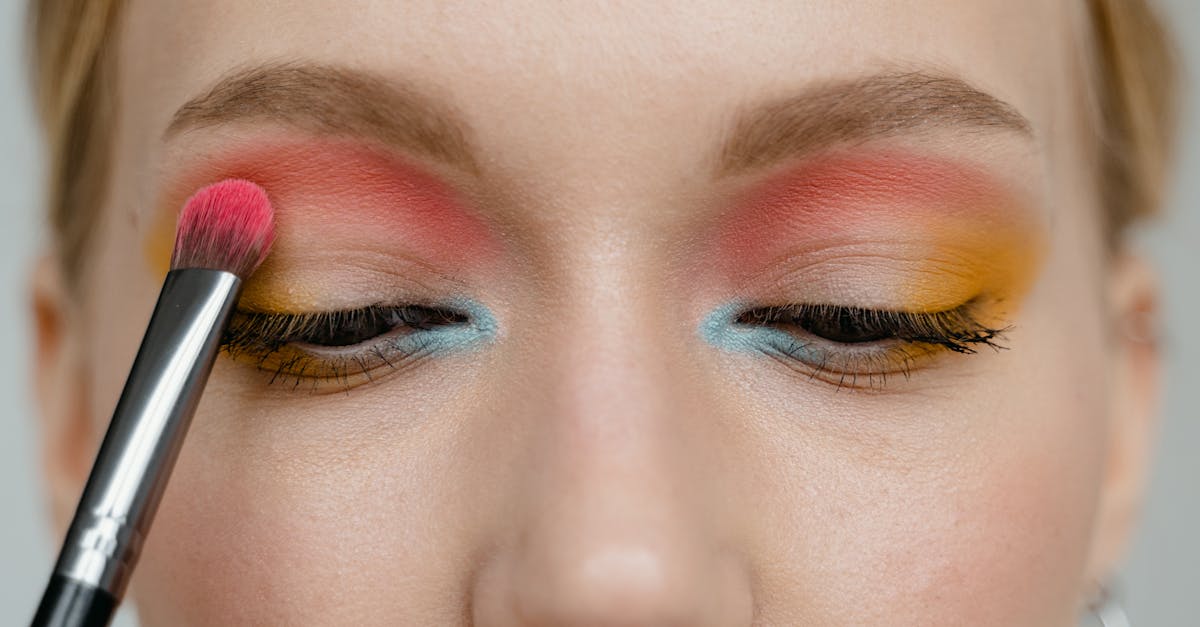
Monolid eyes have a smooth, flat eyelid without a visible crease. The lid extends from the lash line to the brow bone in one continuous plane, which means there’s no natural fold where a crease shade “sits.” This shape is common among people of East Asian descent, though it appears across all ethnicities.
Most mainstream eyeshadow tutorials are designed for eyes with a prominent crease. When you have monolids, the usual advice about placing a transition shade “in the crease” and a deeper shade “in the outer V” doesn’t translate directly. Your eyes need a different approach that works with the shape rather than trying to replicate a crease that isn’t there.
This page is the shape-and-placement sibling: why crease rules fail and how to work horizontally from the lash line. The step-by-step monolid tutorial is the recipe card (gradient lid, graphic liner). Both URLs stay live.
Understanding Monolid Placement
On a monolid, the most visible area when your eyes are open is the strip of skin directly above your lash line. Everything above that gradually folds under or sits flat. This means:
- Color placed on the mobile lid tends to disappear. When your eyes are open, most of the lid folds under, hiding your work. The solution is to extend color higher and check placement with your eyes open.
- Horizontal placement matters more than vertical. Rather than building depth from lid to crease to brow bone, you’re building it from inner corner to outer corner.
- The lash line is your anchor point. Since it’s always visible, this is where your most impactful color placement should start.
Step 1: Prime and Set
Monolid skin folds over the lash line, which causes transfer and smudging more than most other eye shapes. Start with a waterproof or long-wearing eye primer applied from lash line to brow bone. Set it with a translucent powder.
If you find even primed shadow transfers, try a tacky primer formula like those designed for glitter or pigments. The extra grip helps shadow stay locked in place despite the skin-on-skin contact.
Step 2: Build a Horizontal Gradient
Instead of the traditional lid-crease-brow vertical gradient, work in a horizontal gradient from inner corner to outer corner.
Start with a light, bright shade on the inner third of your lid. Move to a medium tone on the middle section. Then apply your deepest shade on the outer third. Blend horizontal boundaries using small, back-and-forth motions.
This horizontal approach keeps your shadow visible because the outer corner of your eye is the area least obscured by the fold. When you look straight ahead, the gradient is visible and creates natural dimension.
Step 3: Extend Beyond Your Lid
To create depth and shape, take your medium and deeper shades slightly beyond the edge of your eyelid. Blend outward and upward toward your orbital bone. This creates the illusion of a wider, more open eye without looking overdone.
Apply these shades with your eyes open so you can see how far the color needs to extend. The shadow should be visible as a soft halo around your outer eye area when you look straight ahead in the mirror.
Step 4: Define the Lash Line
The lash line is the most visible feature on a monolid, so this is where definition matters most. Apply a darker shade (a matte brown, charcoal, or black) as close to your lash line as possible using a small, dense brush.
Smudge it slightly upward to create a soft, smoky border rather than a hard line. This gives your eyes depth without relying on a crease for dimension.
Step 5: Optional Crease Illusion
If you want to create the appearance of a crease, apply a matte shade two or three tones darker than your skin above where a natural crease would be. With your eyes open, mark a soft line at the point where you want the “crease” to appear — usually about a third of the way between your lash line and your brow.
Blend this line until it looks like a natural shadow rather than a drawn mark. This technique is optional and personal. Many monolid makeup styles (especially in Korean beauty) intentionally skip the fake crease in favor of emphasizing the natural lid shape.
Step 6: Eyeliner That Works
Standard eyeliner on monolids often disappears into the fold or becomes a smudgy mess. Here are techniques that work:
Gel liner in soft tones stays put better than pencil and gives a softer look than liquid. Korean beauty trends favor espresso or warm brown gel liners over black for a more natural transition from shadow to liner.
The feline flick starts about one-third of the way from the inner corner and extends outward near the end of your brow. Keep the line thin and draw it with your eyes open and relaxed, not stretched. The wing should angle slightly upward.
Tightlining works on any eye shape, but it’s particularly useful for monolids. Pushing black or brown liner between your upper lashes defines the eye without occupying any lid space.
Step 7: Lower Lash Line Balance
Take a soft shade (your medium transition color works well) along the lower lash line from the outer corner to roughly the middle of your eye. This connects the upper and lower eye and prevents the look from feeling top-heavy.
For extra brightness, place a shimmery champagne or light gold shade on the inner corner and the first third of your lower lash line. This opens the eye and draws light to the center of your face.
Step 8: Lashes and Mascara
Curled lashes make a dramatic difference on monolids. The straight lash growth pattern common with monolids can obscure your shadow work. A good lash curler followed by waterproof or tubing mascara lifts lashes away from the lid and opens up the entire eye.
If you wear false lashes, choose styles that are longer on the outer half to create a lifted, elongated effect. Individual lash clusters placed on the outer corner achieve the same look with a more natural feel.
Product Recommendations for Monolids
Primers: Look for waterproof, tacky formulas. Standard primers may not hold up against the skin-on-skin contact monolids create.
Shadows: Pressed formulas in buildable textures work best. Avoid loose pigments, which fall out and settle in the fold. Cream-to-powder formulas are excellent for the lid itself, while mattes are ideal for your outer corner and gradient work.
Liners: Gel or felt-tip liners resist smudging better than pencil. Waterproof formulas are essential — standard liner will transfer within an hour.
Mascara: Waterproof or tubing formulas hold curl and resist the downward pressure of the lid fold. Non-waterproof mascaras tend to smudge onto monolids within a few hours.
Frequently Asked Questions
Can monolids wear bright or bold eyeshadow?
Absolutely. Bold shadows look striking on monolids because the smooth, uninterrupted lid provides a clean canvas. Vivid colors and metallic finishes show beautifully along the lash line and outer corner.
Why does my eyeshadow always transfer?
The fold of a monolid creates constant friction. The fix is a tacky primer, setting powder, and waterproof formulas. Avoid creamy, emollient shadows in the fold zone.
Is Korean-style eye makeup only for monolids?
Korean beauty techniques were developed with monolids in mind, but they work on all eye shapes. The emphasis on gradient placement and soft definitions translates across anatomies.
Sources
- Makeup.com. (2025). “How to Apply Eyeshadow on Monolid Eyes.” makeup.com.
- PureWow. (2025). “The Best Eyeshadow Techniques for Monolid Eyes.” purewow.com.
- Ipsy. (2025). “Monolid Eye Makeup Tips from Pro Artists.” ipsy.com.
Related Guides
Get weekly eye care & beauty tips
Guides from the Eyeshadow Looks Beauty Desk. No spam, ever.
Related Articles
 tutorials
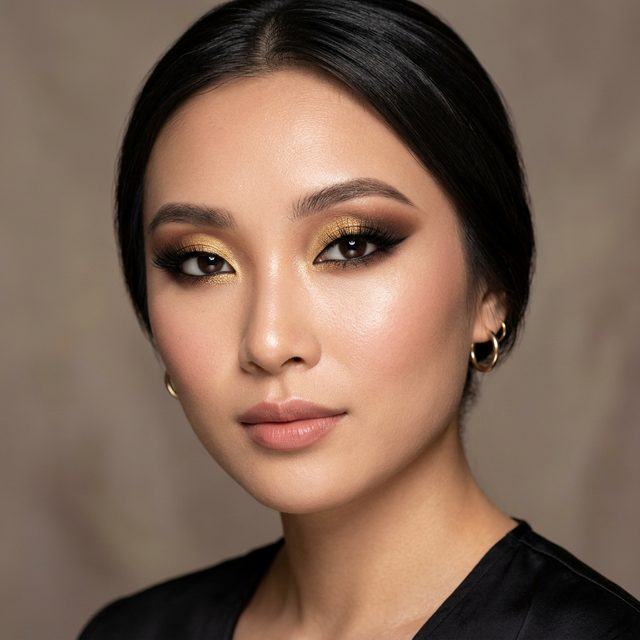
 Monolid Makeup Tutorial: Eyeshadow Techniques That Actually Work
Read Guide arrow_right_alt tutorials
 How to Apply Eyeshadow for Beginners: Step-by-Step Guide (With Pictures)
Read Guide arrow_right_alt tutorials
 Eyeshadow for Beginners: The Complete Starter Guide
Read Guide arrow_right_alt tutorials
 Best Eyeshadow for Beginners: Step by Step Guide
Read Guide arrow_right_alt tutorials
 Smokey Eye Tutorial: Step by Step for Beginners
Read Guide arrow_right_alt tutorials