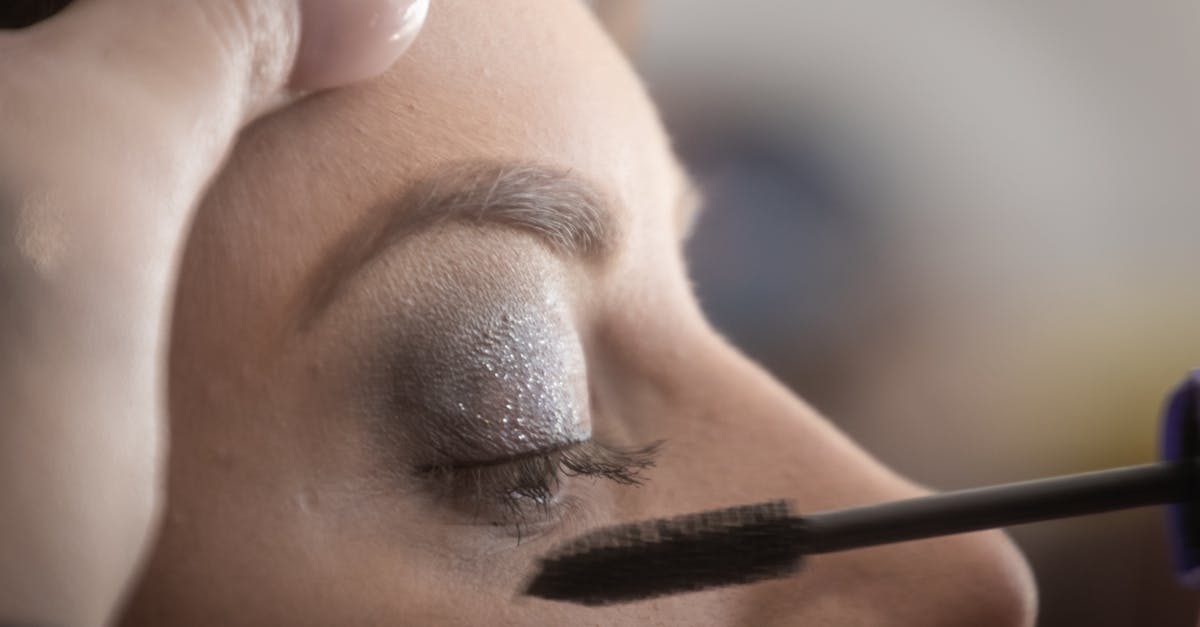
Close-set eyes are common, many people have eyes set slightly closer together than the geometric average, and the adjustment techniques are straightforward once you understand what you’re working with.
The goal with close-set eye makeup is directional: visually pull the eye outward toward the temples while de-emphasizing the nose-facing inner corner.
The Core Principle
Emphasize the outer eye, de-emphasize the inner corner.
Everything in close-set makeup flows from this. Dark, saturated color at the inner corner closes the space. Light, bright, or open color at the inner corner opens it. All the specific techniques are just applications of this principle.
Eyeshadow Placement for Close-Set Eyes
What to Do
Keep inner two-thirds of the lid light: Apply your lid color, whether a neutral shimmer, satin, or light matte, from the inner corner to approximately the middle of the lid. Keep this zone light and bright.
Place defining color on the outer third only: Your crease definition, deeper shadow, or any dramatic color should be concentrated on the outer third of the lid and outer crease. This creates visual weight at the outer eye and pulls attention outward.
Use a diffused outer wing on the crease: When blending your crease color, direct it slightly outward past the outer corner. A crease shape that extends horizontally (rather than rounding evenly back toward the nose) elongates the eye and makes the space appear wider.
Bright highlight at the inner corner: Apply your lightest shade, a pale champagne, white shimmer, or even a small amount of a light pink, at the inner corner of the lid. This brightens the space next to the nose and reads as more distance between the eyes.
What to Avoid
- Dark crease color that wraps around into the inner corner
- Heavy dark shadow placed at the inner corner of the lid
- Central, symmetrical placement of deep shades that frames the nose rather than the outer eye
Liner for Close-Set Eyes
Upper Liner
Standard upper lash line liner is fine. For extra widening effect, start your liner slightly past the inner corner (instead of at it) and extend past the outer corner into a small wing. This leaves the inner corner lighter and adds length at the outer end.
Lower Liner/Lower Lash Line
Avoid dark liner on the inner lower waterline, this draws a dark line right at the point you’re trying to de-emphasize.
Instead: white or nude pencil on the inner corner of the waterline. This opens the space considerably and is one of the most effective single changes for close-set eyes.
If you want lower lash line definition, apply a dark or warm brown shadow to the outer two-thirds of the lower lash line only. Stop before the inner corner.
Eyebrow Shape
The distance between the inner edges of the two eyebrows affects how close or wide the eyes read.
For close-set eyes: start your brows slightly further from the nose than you normally would. Trimming or plucking the innermost few hairs of each brow (or not filling in to the inner edge when using a brow pencil) increases the visual distance between the brows and consequently between the eyes.
The inner corner of the brow should align with the outer edge of the nose in standard brow mapping, for close-set eyes, shifting that starting point a few millimeters outward is appropriate.
Hair and Overall Face Considerations
Center parts draw the eye inward and can emphasize closeness. Side-parted styles or styles with texture at the sides direct attention outward. These aren’t a substitute for technique but reinforce it.
Quick Reference: Close-Set Eyes
| Zone | What to Do | What to Avoid |
|---|---|---|
| Inner corner | Light highlight shimmer | Dark or saturated shadow |
| Lid center | Light to medium shade | Heavy coverage |
| Outer corner | Deepest/darkest shade | Light or blank |
| Crease | Extend slightly outward | Round arc toward nose |
| Upper liner | Start slightly past inner corner | Thick inner corner liner |
| Lower waterline inner | White/nude pencil | Dark liner |
| Lower lash line | Outer two-thirds only | Full lower liner |
| Brows | Start slightly further from nose | Full inner brow saturation |
Related Guides
- Eyeshadow Placement Guide: Where to Apply Every Shade
- How to Apply Eyeshadow for Beginners
- Eyeliner Tutorial: Every Type Explained
- Hooded Eyes Eyeshadow: Techniques That Actually Show Up
Advanced Techniques for Close-Set Eyes
The Floating Liner Technique
Instead of starting liner from the inner corner, begin your upper liner from the middle of the eye and extend outward into a wing. This completely removes dark definition from the inner zone, where close-set eye techniques most need to avoid adding weight.
Combine this with a small inner corner highlight, a champagne or white shimmer pressed into the inner corner, to open the space between the eyes visually.
Color Strategy by Tone
Warm tones (gold, copper, rust): Work exceptionally well at the outer corner of close-set eyes because they draw warmth and attention toward the temple area.
Cool tones (blue, green, purple): Use with caution on close-set eyes, cooler shadows don’t have the same visual-pull-outward effect. If you love cool tones, concentrate them on the outer corner and keep the inner area minimal.
Neutral tones: The safest choice for everyday looks. Light taupe or beige on the lid, medium brown in the transition zone concentrated at the outer crease.
Concealer and Color Correction Around the Eye
If you have dark circles that extend toward the inner corner, color-correcting this area before concealing brightens it and reduces the visual weight that contributes to the close-set appearance. A peach or salmon corrector under your regular concealer lightens the inner corner area effectively.
Bright concealer at the inner corner (the classic “triangle of light” technique) also creates the illusion of more inner-corner space, reducing the close-set effect.
Brow Considerations
The brow shape significantly affects how close-set eyes read:
Inner brow starting point: Start your brows slightly further out than the inner corner of the eye (not directly above it). Use a brow pencil or powder to taper your brow product outward, beginning a few millimeters past the inner corner of the eye.
Arch placement: Move the highest point of your arch toward the outer half of the brow rather than the center. An arch that peaks at the center or inner half shortens the inner distance visually.
Brow tails: Extend your brow tail further toward the temple than you normally would. A longer tail increases the horizontal span of the brow, which balances the close-set eye proportion.
Common Mistakes
Heavy inner corner liner: Kohl or dark shadow applied heavily at the inner corner is the most common technique that worsens the close-set appearance. If you love inner corner definition, use a very thin line rather than smudged shadow.
Round shadow placement: Shadow focused on the cup of the eye (directly above the iris center) creates a rounded, centralized effect rather than a horizontal, elongating one.
Very dark, thick upper liner from corner to corner: This frames the eye symmetrically from both sides and emphasizes the closeness. Instead, start liner thin at the inner corner (or skip the inner corner entirely) and build thickness outward.
Quick Product Guide
| Product | Best Choice for Close-Set Eyes |
|---|---|
| Inner corner highlight | White or champagne shimmer shadow or pencil |
| Liner | Thin at inner corner, flicked at outer edge |
| Eyeshadow | Earth tones on outer zone, light neutrals inner zone |
| Mascara | Lengthening formula, swept outward on outer lashes |
| Brow pencil | Feathered outward from above inner corner |
Sources
- The Makeup Artist Handbook, Gretchen Davis (2009)
- Charlotte Tilbury, “Eye shape makeup guides” (2020)
- Kevyn Aucoin’s Making Faces, Eye proportion correction principles
We evaluate beauty products and techniques independently. To learn more about our editorial standards, read our Editorial Policy.
Get weekly eye care & beauty tips
Guides from the Eyeshadow Looks Beauty Desk. No spam, ever.
Frequently Asked Questions
How do you know if you have close-set eyes?
The standard measurement used in makeup artistry: if the gap between your two eyes is less than one eye-width, your eyes are considered close-set. You can check by holding your finger horizontally at the bridge of your nose, if it covers more space than just one eye-width, there's less space between your eyes than the conventional 'average.'
Does eyeliner make close-set eyes worse?
It depends on placement. Dark liner at the inner corner of the eye draws attention to the space between the eyes and makes them appear closer. Light or white liner at the inner corner, however, creates the opposite effect, it brightens and optically expands the space. Avoiding dark intensity at the inner corner is the main liner adjustment for close-set eyes.
What color eyeshadow looks best on close-set eyes?
Lighter, brighter shades work best at the inner two-thirds of the lid, while deeper, more defining shades are placed at the outer corner only. Putting the most intense color at the outer corner pulls the eye visually outward, creating the appearance of more space between the eyes.