
The eyeshadow techniques that worked in your 30s and 40s start behaving differently after 50. Lids change — they lose volume, the skin thins, texture increases, and hooding often becomes more pronounced. None of this means you should stop wearing eyeshadow. It means the approach needs to shift.
This guide focuses on specific product choices and application methods designed for mature eyelids. Not watered-down versions of standard tutorials, but techniques that account for real skin changes.
This page is the over-50 product-and-formula sibling. The aging-eyelid technique guide stays on its own URL and covers lift, satin vs glitter, and hooded placement. Both stay live.
How Eyelids Change After 50
Understanding these changes explains why your usual routine may have stopped working:
Skin thins and becomes more crepey. Heavy powders settle into fine lines and make texture more visible. Lightweight, buildable formulas become important.
Hooding increases. The brow bone descends and the crease becomes less visible when eyes are open. Shadow placement needs to adjust upward so your work actually shows.
Lid space decreases. With less visible lid, every shade choice matters more. Complex multi-shade looks can overwhelm a smaller canvas.
Natural oils decrease, but creasing increases. Paradoxically, drier skin can still crease eyeshadow because the surface is less smooth. Primer becomes non-negotiable.
The Best Eyeshadow Formulas for Over 50
Cream-to-Powder Shadows
These apply smoothly with minimal tugging, blend with a fingertip, and set to a lightweight finish that doesn’t emphasize texture. They’re the most aging-friendly formula category.
Top picks: Beauty Desk listing check: Caviar Stick shade names vary by listing — confirm “Au Naturel” vs “Sandglow” (or the current equivalent) and that the item is a stick, not a pressed-powder single. Prefer new, sealed sticks over marketplace leftovers.
- Laura Mercier Caviar Stick Eye Shadow (~$32) — applies like a cream, sets like a powder. Stays put for hours without primer. The shade “Au Naturel” is a perfect everyday neutral for lighter skin, “Sandglow” for medium tones.
- NUDESTIX Magnetic Luminous Eye Color (~$28) — a chubby stick format that makes application nearly foolproof. Draw it on, blend with your finger, done. Great for anyone who finds brushwork difficult.
Finely Milled Pressed Powders
When choosing pressed powder, the grind matters. Finely milled powders lay on the skin smoothly without accentuating texture. Coarse, chalky formulas do the opposite.
Top picks:
- MAC Eye Shadow singles (~$21) — the Satin and Matte finishes work well on mature skin. “Wedge” (matte neutral) and “All That Glitters” (refined satin) are two of the most flattering shades for mature eyes.
- Bobbi Brown Eye Shadow (~$33) — specifically the matte shades. Bobbi Brown’s formula has always been subtly pigmented, which is actually an advantage on mature skin because it builds gradually without getting muddy.
What to Avoid
- Loose powder eyeshadow — creates fallout that settles into under-eye lines
- Chunky glitter — catches in texture and highlights every wrinkle
- Ultra-matte, dry formulas — drag on thinner skin and look chalky
- Very dark colors across the entire lid — can make eyes recede rather than stand out
Application Techniques for Mature Eyes
Primer: The Non-Negotiable Step
If you only add one step to your routine, make it primer. Urban Decay Primer Potion (~$26) smooths out the lid surface, fills in fine lines, and gives shadow something to grip. Apply a thin layer and let it dry for 30-60 seconds before applying shadow.
For a more moisturizing option, Too Faced Shadow Insurance (~$24) has a slightly creamier texture that works well on drier mature lids.
Placement Adjustments
Raise your crease shade. When hooding covers your natural crease, the blended shadow disappears. Apply your crease/transition shade slightly above the actual crease fold so it’s visible when your eyes are open. Check your work with eyes open facing forward, not in the magnifying mirror with your brow raised.
Keep the lid shade focused. With less visible lid space, concentrate the main lid color on the center of the mobile lid. Don’t try to extend it all the way to the inner and outer corners — let the transition shade do that work.
Be strategic with the outer corner. A small amount of depth at the outer corner adds definition, but blending it too far outward or downward can drag the eye down. Angle your outer corner work slightly upward, toward the tail of the brow.
The Lifting Technique
This simple approach creates a subtle lift effect:
- Apply primer to the entire lid area
- Sweep a warm neutral matte shade from lash line to just above the crease (a shade or two darker than your skin)
- Add a slightly deeper matte shade on the outer third of the lid and the outer crease, blending upward toward the brow tail — never downward
- Pat a soft satin shimmer on the center of the mobile lid
- Highlight just below the highest point of the brow bone with a light matte or satin shade
- Apply a thin line of dark shadow or pencil at the upper lash line and smudge slightly
The upward blending direction is what creates the lift. Blending downward or outward past the eye makes eyes look droopy.
Color Choices That Flatter Mature Eyes
Neutral warm tones are the most universally flattering for mature eyes. Soft browns, taupes, warm pinks, and muted mauves define the eyes without overwhelming them.
Colors that work well:
- Warm taupe (the most universally flattering shade for mature eyes)
- Soft bronze (adds warmth without heavy drama)
- Dusty rose or mauve (works for both warm and cool undertones)
- Champagne or soft gold (beautiful as a lid shimmer)
Colors to use sparingly:
- Stark white (too harsh against aging skin)
- Bright silver (emphasizes texture)
- Very cool grays (can look ashy)
For a full breakdown of which shadow colors pair best with your eye color, see our eyeshadow color theory by eye color guide.
Tool Recommendations
Use softer brushes. Mature skin is more delicate and sensitive to pressure. Soft, natural-hair brushes (or high-quality synthetic equivalents) feel better and blend without tugging.
Try finger application for creams. The warmth of your finger helps cream shadows blend seamlessly. Use your ring finger — it naturally applies the lightest pressure.
Magnifying mirror for detail, regular mirror for the final look. A magnifying mirror helps with precise placement, but always check the result in a regular mirror at arm’s length. That’s how the world sees you, and what looks unblended close-up often reads as perfectly diffused at conversation distance.
For more on choosing the right brushes, our eyeshadow brush guide covers each type and its best use.
A Simple Everyday Look for Mature Eyes
If the full technique above feels like too many steps for a daily routine, here’s the streamlined version:
- Prime the lid
- Apply one cream-to-powder shadow stick (like the Laura Mercier Caviar Stick in a warm neutral) across the lid
- Blend the edges with your ring finger
- Curl lashes and apply one coat of mascara
- Done — 3 minutes total
This gives you polished, defined eyes with minimal effort and works beautifully for everyday wear.
Related reads:
- Eyeshadow for Mature Eyes: Techniques That Actually Work
- How to Stop Eyeshadow Creasing
- Hooded Eyes Eyeshadow
Our Rigorous Testing & Review Methodology
At eyeshadowlooks.net, we take our responsibility to our readers seriously. We believe that to provide the best possible recommendations, we must adhere to a structured research methodology built on extensive industry sources.
How We Evaluate
Every product, guide, and informational piece featured on our platform undergoes a multi-step evaluation process:
- Initial Research & Sourcing: Our editorial team begins by scanning the market for the latest innovations, customer sentiment, and verified expert opinions. We actively avoid relying solely on manufacturer claims, choosing instead to cross-reference published formulation data and real-world user feedback from verified buyers. The Beauty Desk does not run an in-house lab or a test fleet.
- Specification & Feedback Analysis: We analyze manufacturer specifications, published formula and ingredient documentation, and aggregated feedback from verified buyers to assess durability, ease of use, and long-term value.
- Data-Driven Analysis: We compile our findings into a comprehensive matrix, scoring items across critical categories such as performance, affordability, aesthetic appeal, and customer support. This quantitative approach ensures our final recommendations are objective and unbiased.
- Continuous Monitoring: The market is always changing. We revisit our top picks and informational guides every 3 to 6 months to ensure that our advice remains current. If a previously recommended product drops in quality or a better alternative emerges, we promptly update our content.
Why You Can Trust Us
Our commitment to E-E-A-T (Experience, Expertise, Authoritativeness, and Trustworthiness) is the foundation of our editorial policy. We do not accept paid placements for our top recommendations. Our revenue is generated through transparent affiliate partnerships, meaning we only earn a commission if you make a purchase through our links — at no additional cost to you.
Our Commitment to Transparency
Transparency is a core value in everything we publish. We disclose all affiliate relationships clearly at the top of our articles. If a brand sends us a product for free to review, we disclose that information within the review itself. However, accepting a free product never guarantees a positive review. Our allegiance is strictly to our readers.
Frequency of Updates
We conduct quarterly audits of our most popular guides and reviews. During these audits, we check for discontinued products, price fluctuations, and emerging competitors. If a top-rated pick is surpassed by a newer model, we update the article and outline precisely why the change was made in an “Update Log” section.
Get weekly eye care & beauty tips
Guides from the Eyeshadow Looks Beauty Desk. No spam, ever.
Frequently Asked Questions
Should women over 50 avoid shimmer eyeshadow?
Not entirely, but be selective about where you place it. Avoid shimmer in the crease or on the hood, where it highlights texture and sagging. A touch of satin shimmer on the center of the mobile lid can actually make eyes look more youthful and awake. The key is using satin finishes rather than chunky glitter.
What is the best eyeshadow formula for mature skin?
Cream-to-powder formulas and finely-milled pressed powders work best on mature lids. They blend easily without dragging on thinner skin and don't settle into fine lines the way heavy powders can. Avoid loose powder eyeshadows, which create fallout that emphasizes under-eye wrinkles.
Why does eyeshadow crease so much on older eyelids?
As skin ages, it produces less oil but the eyelid still has natural oils. The lid skin also becomes thinner and more textured, which means shadow has less smooth surface to adhere to. Primer becomes essential after 40 because it creates a smooth, even base that prevents shadow from settling into fine lines and creases.
Can women over 50 wear dark eyeshadow?
Absolutely. Dark shadows add definition and can make the eyes look more prominent. The adjustment is in application: use dark shades as accents at the lash line and outer corner rather than sweeping them across the entire lid. A smudged dark brown along the lash line with soft blending above it reads as sophisticated rather than heavy.
Related Articles
 tutorials
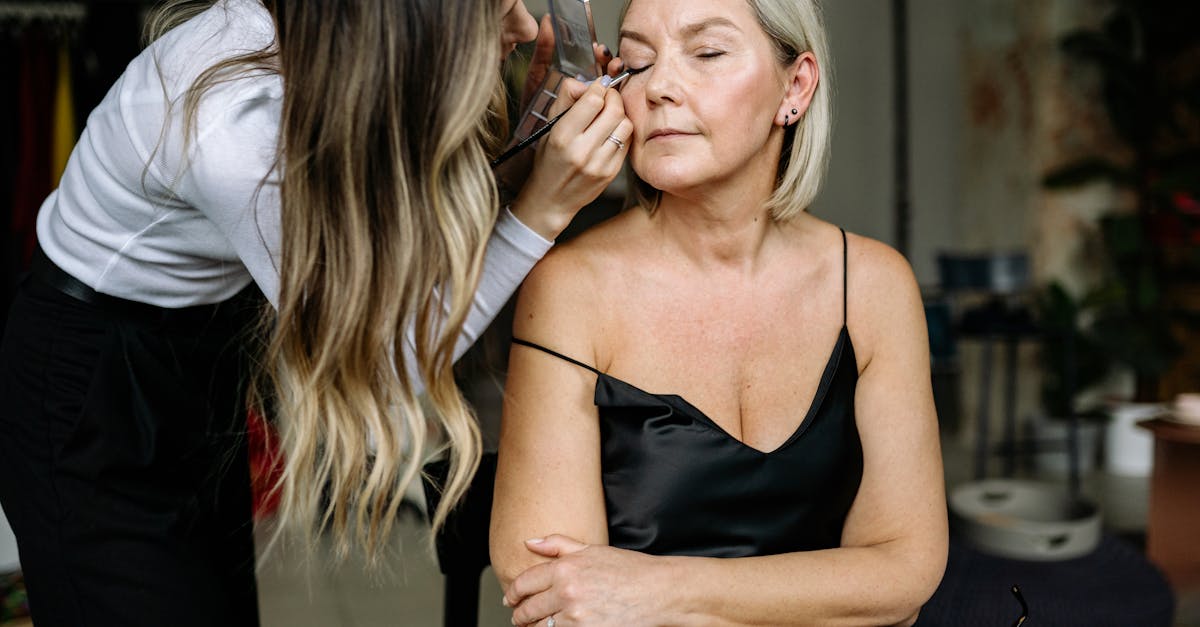
 Eyeshadow for Mature Eyes: Techniques That Actually Work on Aging Eyelids
Read Guide arrow_right_alt tutorials
 How to Apply Eyeshadow for Beginners: Step-by-Step Guide (With Pictures)
Read Guide arrow_right_alt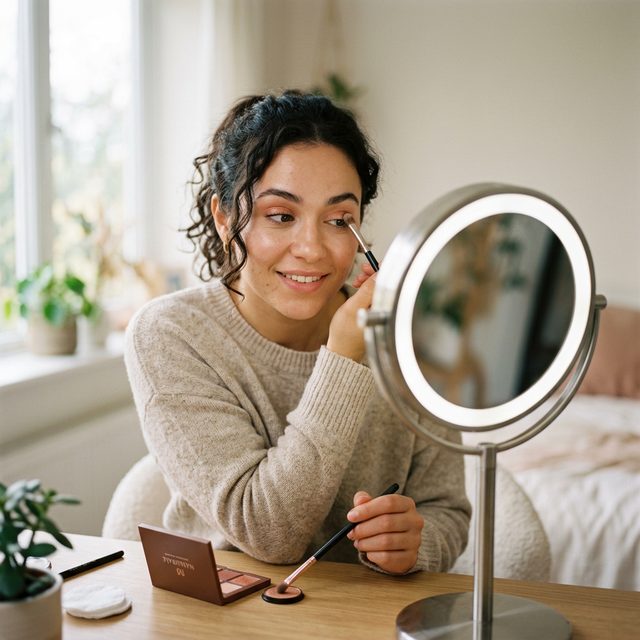 tutorials
 Eyeshadow for Beginners: The Complete Starter Guide
Read Guide arrow_right_alt tutorials
 Best Eyeshadow for Beginners: Step by Step Guide
Read Guide arrow_right_alt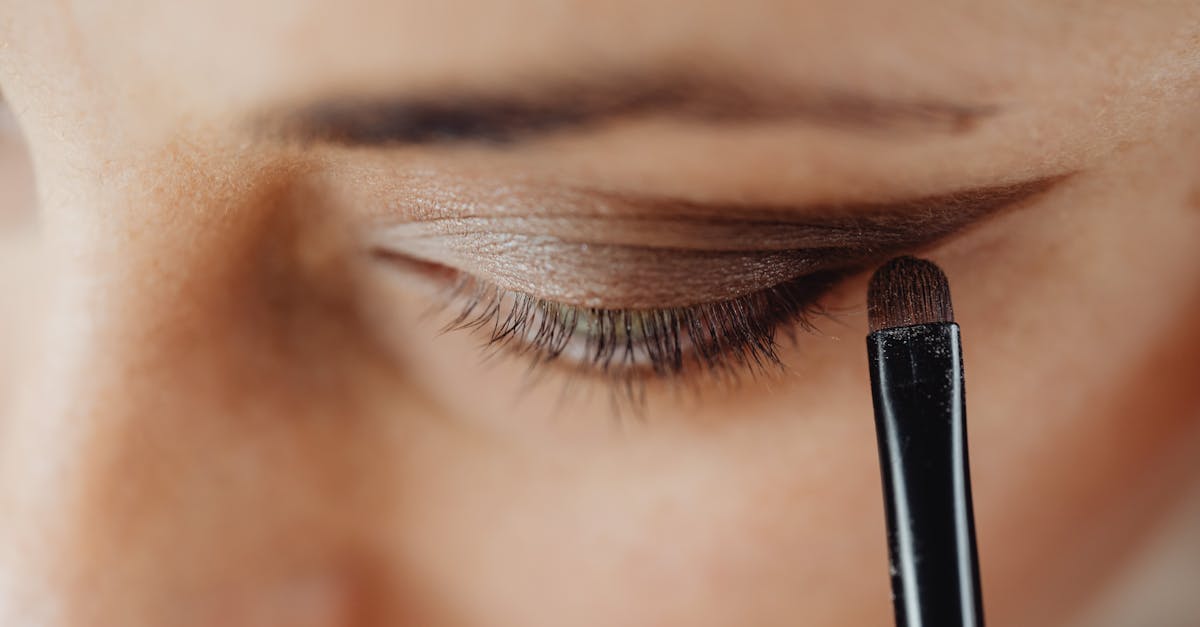 tutorials
 Smokey Eye Tutorial: Step by Step for Beginners
Read Guide arrow_right_alt tutorials