
If your eyes water, itch, or swell after applying eyeshadow, the problem is almost certainly a specific ingredient rather than the product as a whole. Identifying which ingredients trigger your reactions saves money and frustration, because you stop buying products blindly and start filtering by what actually matters.
Sensitive eye reactions to makeup fall into two categories: irritation and allergy. Irritation is a direct chemical response where a substance damages or inflames the skin on contact. Allergy is an immune system overreaction to a specific ingredient, which can worsen over time with repeated exposure. Both produce similar symptoms, redness, itching, swelling, and watering, but they have different causes and different solutions.
Ingredients That Commonly Cause Problems
Fragrance (Parfum)
Fragrance is the single most common cause of cosmetic contact dermatitis, and it has no functional purpose in eyeshadow. It exists purely for the sensory experience of opening the palette, which is not worth the risk for sensitive eyes.
The problem with fragrance is that the word “parfum” or “fragrance” on a label can represent dozens of individual chemical compounds. You cannot identify which specific fragrance chemical is causing your reaction without patch testing each one.
The simplest solution: avoid any eyeshadow that lists fragrance or parfum in its ingredients. Many professional and dermatologist-recommended lines are fragrance-free by default.
Preservatives
Preservatives prevent bacterial growth in cosmetics, which makes them important for product safety. However, certain preservatives are significantly more likely to cause reactions than others.
Preservatives to watch for:
- Methylisothiazolinone (MI) and methylchloroisothiazolinone (MCI): Among the most common causes of cosmetic contact allergy. The European Union has restricted MI in leave-on cosmetics, including eye makeup. If a product contains either, sensitive eyes should avoid it.
- Formaldehyde-releasing agents: These include DMDM hydantoin, quaternium-15, diazolidinyl urea, and imidazolidinyl urea. They release small amounts of formaldehyde over time, which is a known skin sensitizer.
- Parabens (methylparaben, propylparaben, butylparaben): These are actually among the better-tolerated preservatives in most people. The negative reputation of parabens is largely based on concerns unrelated to skin sensitivity. For sensitive eyes specifically, parabens rarely cause irritation compared to the alternatives listed above.
Better-tolerated preservatives: Phenoxyethanol, potassium sorbate, sodium benzoate, and ethylhexylglycerin generally cause fewer reactions while still providing effective preservation.
Colorants and Dyes
Eyeshadow color comes from pigments and dyes, and some are friendlier to sensitive eyes than others.
Commonly problematic colorants:
- Carmine (CI 75470): Derived from crushed cochineal insects. This natural colorant produces beautiful reds and pinks but causes allergic reactions in a notable subset of the population. Reactions can range from mild irritation to severe swelling.
- D&C Red dyes (especially Red No. 36 and Red No. 40): Synthetic dyes that cause more reported reactions than most mineral pigments.
- Ultramarine blue and ultramarines: Generally safe but can cause irritation in some individuals when the particles are very finely milled.
Better-tolerated colorants: Iron oxides (CI 77491, CI 77492, CI 77499) are the workhorses of eyeshadow color. They produce browns, reds, yellows, and blacks and are among the least reactive pigments available. Titanium dioxide (CI 77891) and mica are also well-tolerated by most sensitive eyes.
Talc
Talc is the most common base ingredient in powder eyeshadow. Pure cosmetic-grade talc is generally safe, but concerns arise around contamination. Historically, some talc sources contained trace asbestos, though modern cosmetic talc testing has largely addressed this issue.
For sensitive eyes, the bigger concern with talc is its drying effect and the fineness of the particles. Very finely milled talc-based shadows produce more airborne dust during application, which can settle on the eye surface and cause irritation.
Talc-free alternatives using mica, silica, or corn starch as the base exist and may be worth trying if talc-based shadows consistently bother you.
Shimmer and Glitter Particles
Shimmer finishes use finely milled reflective particles, typically mica coated with titanium dioxide or iron oxides. These are generally safe for sensitive eyes.
Loose glitter, however, is a genuine safety concern regardless of sensitivity level. Larger glitter particles can scratch the cornea if they migrate into the eye. The FDA has reported cases of serious eye injuries from cosmetic glitter. If you have sensitive eyes, avoid loose glitter and chunky glitter formulas entirely. Finely pressed shimmer is a safer alternative that achieves a similar visual effect.
How to Read an Eyeshadow Ingredient Label
Ingredient lists on cosmetics follow a specific order: ingredients are listed from highest concentration to lowest. The first five to seven ingredients typically make up the bulk of the product.
For eyeshadow, the ingredient list usually begins with the base (talc, mica, or silica), followed by binding agents (dimethicone, zinc stearate), then colorants, and finally preservatives and fragrances at the end of the list.
When evaluating a product for sensitive eyes, scan the entire list for the known irritants mentioned above. Pay special attention to anything listed in the last third of the list, where preservatives and fragrance typically appear. These are present in small amounts but can still cause reactions.
Products labeled “may contain” followed by a list of colorants are using a shared ingredient list across multiple shades. The specific shade you are purchasing may not contain all listed colorants, but it will contain some of them. This makes it harder to pinpoint a colorant reaction from one specific shade.
What “Ophthalmologist-Tested” and “Hypoallergenic” Actually Mean
These terms appear on packaging frequently, but their regulatory meaning may surprise you.
Ophthalmologist-tested means an eye doctor evaluated the product during testing. It does not specify what they tested for, how many people were tested, or what the results were. A product can be ophthalmologist-tested and still cause reactions in sensitive individuals.
Hypoallergenic has no legal or regulatory definition in the United States. The FDA attempted to define it in the 1970s, but the regulation was overturned in court. Any brand can use this term on any product without demonstrating reduced allergenicity.
Dermatologist-recommended similarly has no standardized criteria. It means at least one dermatologist was willing to recommend or endorse the product.
These labels are not worthless, products that carry them are often formulated with some attention to sensitivity, but they are not guarantees. The ingredient list itself is more reliable than any marketing term on the front of the package.
Brands Known for Sensitive Eye Formulas
Several brands consistently formulate with fewer irritants and maintain transparent ingredient lists:
Clinique was one of the first prestige brands to formulate without fragrance across its entire line. Their eyeshadows use relatively simple formulas with mineral pigments and minimal preservatives.
bareMinerals uses mineral-based formulas without talc, synthetic fragrance, or many of the common preservative irritants. Their loose powder format does create more airborne particles during application, so tap excess off your brush before applying.
Almay markets specifically to sensitive skin and eyes. Their formulas are consistently fragrance-free and have simple ingredient lists.
RMS Beauty uses organic and food-grade ingredients in their cream shadow formulas. Fewer ingredients generally means fewer potential triggers.
Always verify current formulations by checking the ingredient list. Brands reformulate products without changing the name, and what was safe last year may have different ingredients this year.
Building a Sensitive-Eye-Safe Routine
If you are starting from scratch after a reaction, the safest approach is an elimination process:
-
Start with one product at a time. Use a single matte eyeshadow in a neutral shade for a week before adding more products. If no reaction occurs, that product is likely safe for you.
-
Patch test new products. Before applying a new eyeshadow to your eyelid, swatch it on the inside of your forearm for 24 hours. If no irritation develops, apply a small amount to one eyelid. Wait another 24 hours before using it fully.
-
Introduce new products one at a time. If you add multiple new products simultaneously and have a reaction, you cannot identify which one caused it.
-
Keep a makeup diary. Record which products you use each day and note any reactions. Over time, patterns emerge that help you identify your specific triggers.
-
Replace products on schedule. Old products harbor bacteria that irritate sensitive eyes even when the formula itself is safe. Follow the shelf life guidelines for each product type.
When to See a Doctor
Occasional mild irritation from a new product is normal and usually resolves within a day of removing the product. However, see an ophthalmologist or dermatologist if:
- Irritation persists for more than 48 hours after removing the product
- You experience swelling that affects your vision
- Your reaction worsens over time with repeated exposure to the same product
- You develop crusty, flaking, or blistering skin on or around your eyelids
- You suspect your reaction is related to a medical condition like blepharitis or ocular rosacea
An allergist can perform patch testing with a standardized cosmetic allergen series to identify your specific triggers. This testing is particularly useful if you react to multiple products and cannot determine the common ingredient through your own process of elimination.
Sources
- American Academy of Dermatology. (2025). “Contact Dermatitis and Cosmetics.” aad.org.
- FDA. (2025). “Cosmetics Safety Q&A: Eye Cosmetic Safety.” fda.gov.
- de Groot, A.C. (2024). “Patch Testing in Allergic Contact Dermatitis.” Springer.
- European Commission. (2025). “Cosmetics Regulation (EC) No 1223/2009.” ec.europa.eu.
Related Guides
Get weekly eye care & beauty tips
Guides from the Eyeshadow Looks Beauty Desk. No spam, ever.
Frequently Asked Questions
What ingredients in eyeshadow cause the most irritation?
The most common irritants in eyeshadow are fragrance (parfum), certain preservatives like formaldehyde-releasing agents and methylisothiazolinone, and specific colorants including carmine and certain iron oxides. Talc can also irritate when it contains trace contaminants.
Is hypoallergenic eyeshadow actually safer?
The term hypoallergenic has no regulated definition in cosmetics. The FDA does not require brands to prove a product is less likely to cause reactions before using this label. Some hypoallergenic products are genuinely formulated with fewer irritants, but the label alone is not a guarantee of safety for sensitive eyes.
Can expired eyeshadow cause eye irritation?
Yes. Expired eyeshadow can harbor bacteria and breakdown products that irritate sensitive eyes. Powder eyeshadow generally lasts 12-24 months after opening. Cream and liquid formulas should be replaced after 6-12 months. If a product changes smell, texture, or color, discard it immediately.
Related Articles
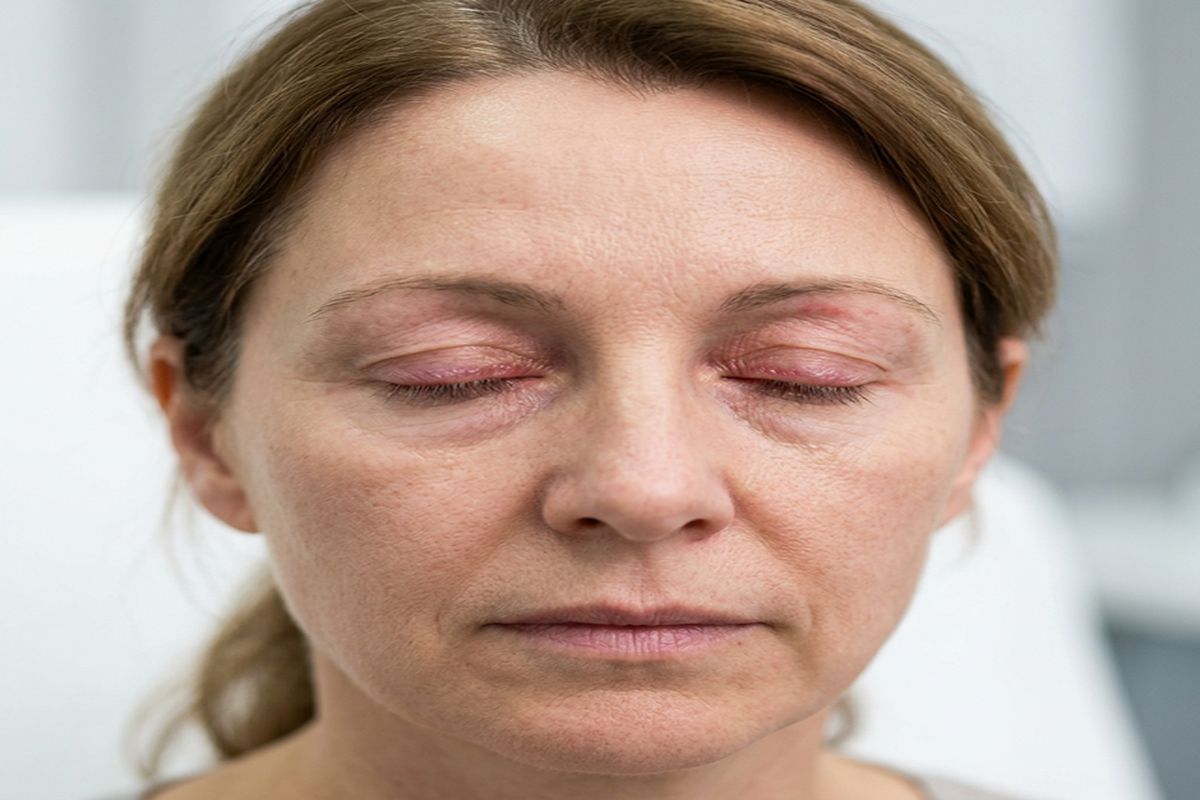 treatments
 Eye Makeup with Blepharitis: What to Wear, What to Avoid, and How to Stay Safe
Read Guide arrow_right_alt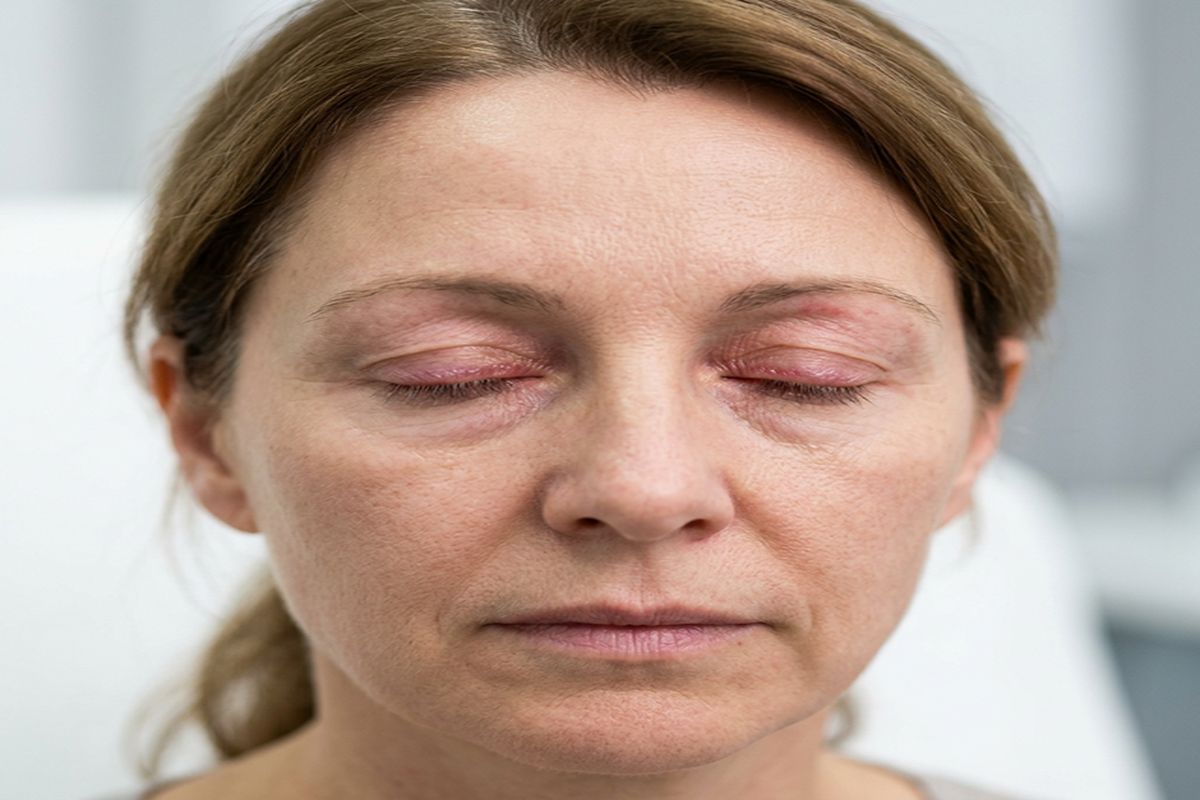 treatments
 Eye Makeup with Ocular Rosacea: What's Safe, What to Avoid, and How to Manage It
Read Guide arrow_right_alt remedies