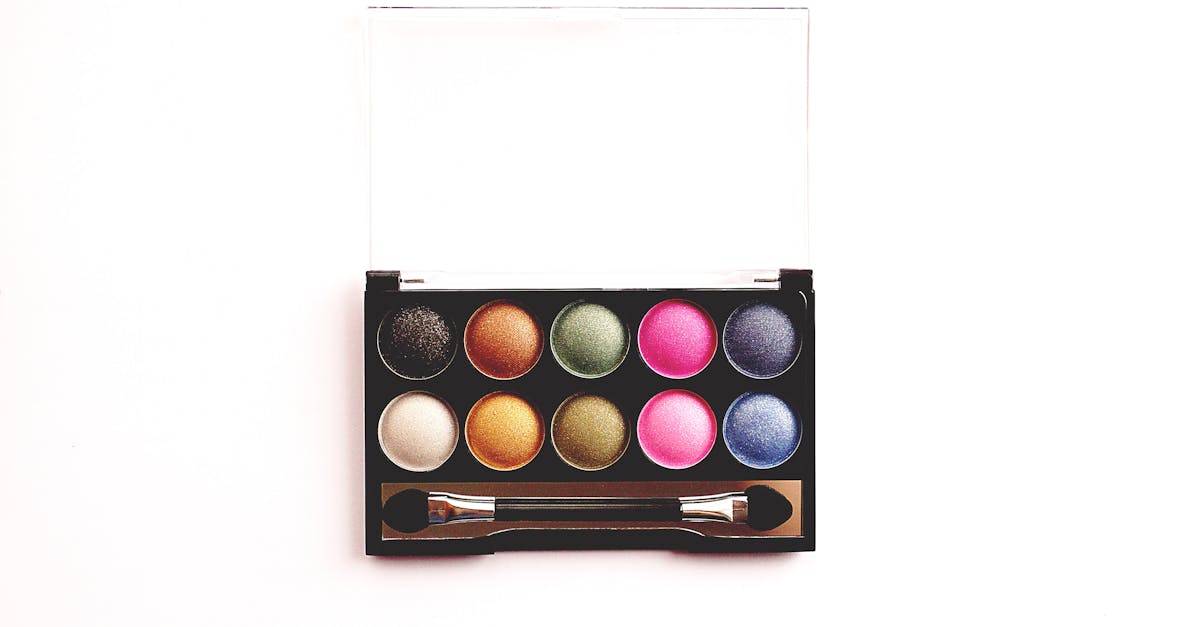
Blue and green eyes have cool, high-luminance irises that interact with eyeshadow color differently than brown eyes. The primary challenge isn’t finding shades that look bad, it’s finding shades that create enough contrast to make the iris color pop rather than recede into the overall look.
The Color Theory Behind It
For blue eyes: Blue irises are enhanced most dramatically by colors from the opposite side of the color wheel: warm oranges, coppers, and terracottas. These aren’t necessarily colors you’d pick up and think “eye shadow,” but they create the strongest visual pop on blue irises.
For green eyes: Green irises sit in a different part of the spectrum, closer to yellow-green. Their complementary contrast colors are red and purple. Warm mauve, burgundy, and plum are what make green eyes truly striking.
Both eye colors are also brightened (not just contrasted) by neutrals with enough warmth to stand off from the cool iris, think taupe, mushroom, and warm champagne, which is why those shades are workhorses for light-eyed makeup looks.
Best Eyeshadow Colors for Blue Eyes
1. Copper and Bronze, The Blue Eye Power Duo
Copper is the single most effective color for making blue eyes stand out. The contrast is rooted in color theory: blue sits roughly opposite orange-copper on the color wheel, so pairing them creates maximum chromatic tension.
How to wear it:
- Use true copper shimmer across the lid
- Deepen the outer corner and crease with a richer bronze or dark brown
- Add a touch of bright copper or gold to the inner corner
- Pair with black mascara and minimal liner for clean impact
The look works in every context from everyday to evening, the shimmer level is what adjusts the formality.
2. Warm Terracotta and Peach-Bronze
If you want copper heat without full metallic shimmer, dusty terracotta and warm peach-bronze deliver the same chromatic contrast in a softer package. These work especially well for everyday looks on blue-eyed blondes or redheads.
Shades to look for:
- Rust, burnt sienna, or warm brick matte
- Peachy coral shimmer for lid wash
- Rich warm brown for crease depth
3. Warm Neutrals: Mushroom, Taupe, Warm Beige
These might seem like a safe choice, but there’s actually color science backing them. Warm neutrals with yellow or red undertones still create slight chromatic contrast with blue irises, while reading as practical and workplace-appropriate.
The trick: avoid cool-toned grays and silver, which can flatten blue eyes rather than brighten them.
4. Navy and Deep Blue (Used Strategically)
Matching your eyeshadow to your eye color is generally a mistake, it flattens the iris. But deep navy used in the crease or outer corner, with a contrasting warm shade on the lid, creates a color-on-color depth that reads as sophisticated rather than matchy-matchy.
The key: Never use navy across the entire lid. Use warm copper or gold on the lid and navy for depth in the crease only.
5. Smoky Charcoal (Done Right)
A classic gray or charcoal smoky eye is universally cited for blue eyes, and it works, but not because of color contrast. It works because the neutral dark frames the iris, which then appears bright by comparison. It’s the same principle as why blue eyes pop on pasty skin: the contrast of the white of the eye draws attention to the iris.
Best Eyeshadow Colors for Green Eyes
1. Purple and Plum, Maximum Impact
Purple creates the strongest contrast with green irises. The more red in the purple (toward mauve and burgundy), the more it pulls out the warmth in green eyes. The more blue in the purple (toward violet), the cooler and more editorial the look.
Spectrum to explore:
- Soft dusty mauve for daytime
- Rich plum for evening
- True bright purple for a bold statement look
- Deep burgundy-purple for autumn drama
Matte purple in the crease plus a lighter lilac or shimmer on the lid is one of the most flattering combinations any green-eyed person can wear.
2. Rose Gold and Dusty Pink-Rose
Rose gold hits a sweet spot for green eyes: the gold component creates warm contrast, the rose component echoes the pink flush in skin tones and amplifies the red spectrum that complements green irises.
3. Terracotta and Warm Earth Tones
Red-toned earth shades, terracotta, brick, cinnamon, burnt orange matte, create warmth that contrasts beautifully with cool green. These work particularly well on green-eyed wearers with warm, medium, or olive skin tones.
4. Warm Champagne and Gold (for a Lower-Effort Glow)
On green eyes, gold shimmer doesn’t create dramatic contrast, it creates brightness. A single wash of warm gold shimmer across the lid makes green irises look luminous and awake. Add a soft taupe crease and mascara and you have a polished everyday look in under 3 minutes.
Shades to Approach Carefully
| Color | Blue Eyes | Green Eyes |
|---|---|---|
| Silver/cool gray | Flattens, can look tired | Safe but undramatic |
| Yellow-green | Clashes or looks jaundiced | Blends into iris; avoid |
| Cool lavender | Low contrast on blue | Low contrast on green |
| Bright white lid only | Looks harsh | Looks harsh |
Frequently Asked Questions
Sources
- Spillmann, L. (2012). Color Perception and Color Reproduction. Springer.
- Itten, Johannes. The Art of Color. Reinhold Publishing, 1961, simultaneous contrast principle applied to iris color
- American Academy of Ophthalmology, Iris and sclera anatomy; light scattering in blue and green irises
Related Guides
- Best Eyeshadow Colors for Brown Eyes
- Eyeshadow Placement Guide: Where to Apply Every Shade
- How to Stop Eyeshadow from Creasing
- Best Eyeshadow Colors for Hazel Eyes
Making Blue and Green Eyes “Pop”: The Color Theory Mechanism
The principle behind complementary shadow for cool-toned eyes is optical simultaneous contrast, when two complementary colors are placed next to each other, each makes the other appear more saturated. Warm shadow adjacent to a cool iris makes the iris color appear more vivid and intense, even when the iris itself hasn’t changed.
This is why warm copper, rust, and bronze shadows create such a striking result on blue and green eyes. The effect is strongest with fully saturated shadow shades, muted or taupe versions of warm tones provide less contrast.
Testing: When evaluating whether a shadow makes your eye color pop, look in natural daylight, the effect is most accurately assessed in neutral outdoor light rather than artificial indoor light, which can shift both shadow and eye color toward warm or cool casts depending on bulb type.
Sources
- Itten, Johannes, The Art of Color (1961), simultaneous contrast principles
- Lisa Eldridge Makeup, “Best shadows for blue eyes: what actually works” (YouTube, 2022)
- Wayne Goss, Tutorial on using color theory for eye makeup (YouTube)
We evaluate beauty products and techniques independently. To learn more about our editorial standards, read our Editorial Policy.
Get weekly eye care & beauty tips
Guides from the Eyeshadow Looks Beauty Desk. No spam, ever.
Frequently Asked Questions
What color makes blue eyes stand out the most?
Warm copper and bronze tones create the strongest contrast with blue irises because orange and copper are directly opposite blue on the color wheel. Burnt sienna, terracotta, and warm peach also create dramatic eye-forward looks.
What color eyeshadow is best for green eyes?
Purple and plum create the most striking contrast with green eyes. Red-brown, mauve, and burgundy also enhance the warm undertones in green irises. Avoid shades too close to the green spectrum, they blend into the eye color rather than making it pop.
Can blue and green eyes wear the same eyeshadow colors?
There's overlap, both look great with warm earth tones, both benefit from avoiding yellow-green shadows, but the specifics differ. Blue eyes are best enhanced by orange-copper contrast; green eyes are best enhanced by purple-red contrast.