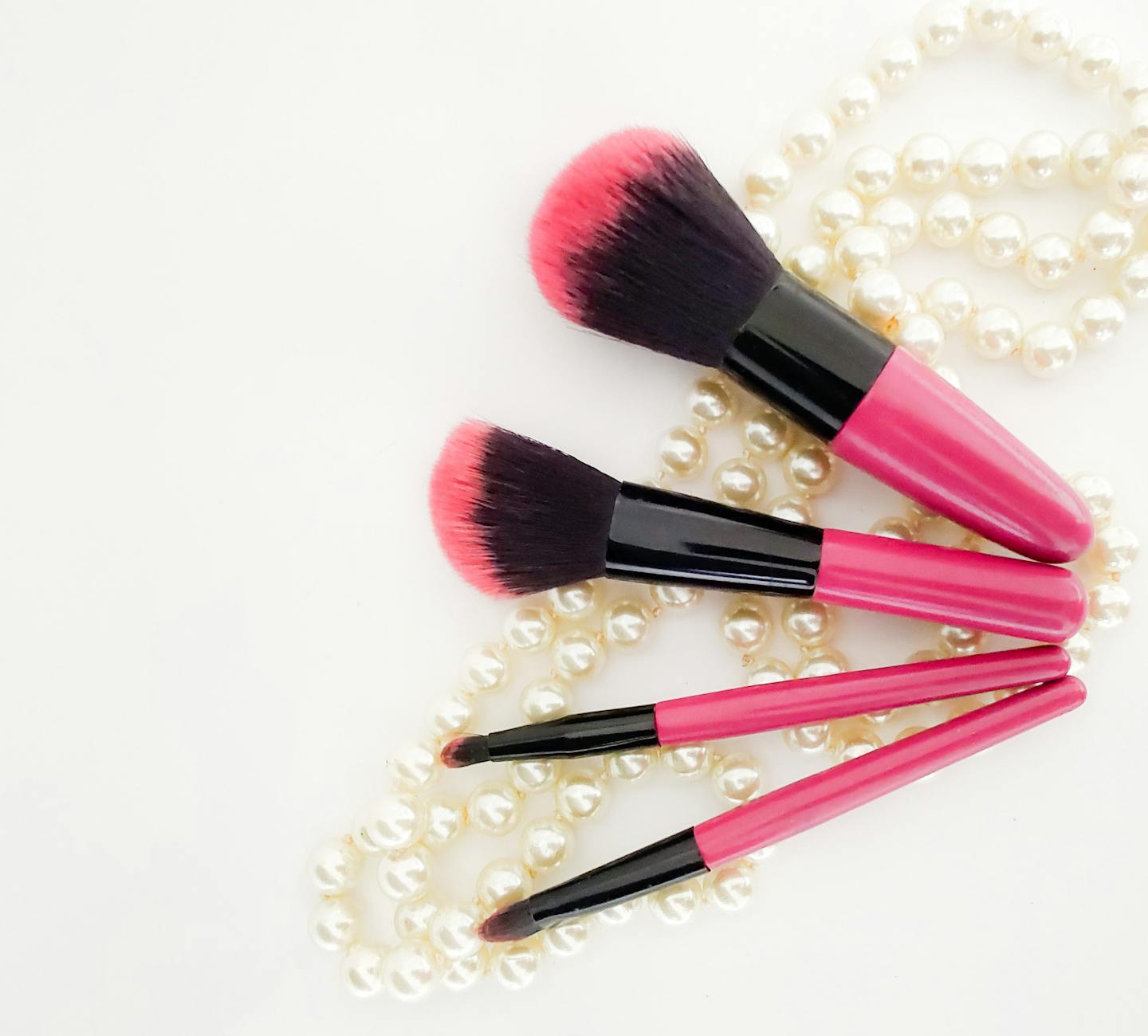
The most common reason beginners struggle with eyeshadow isn’t technique, it’s using the wrong brush for the job. A flat stiff brush used to blend will just drag color around. A fluffy blending brush used to pack color onto the lid will produce a washed-out, powdery result. Understanding what each brush does is the faster path to better eye looks.
Here are the six brushes that cover everything, what they each do, and the best starter options.
The 6 Essential Eye Brushes
1. Flat Shader Brush
What it does: Packs eyeshadow onto the lid with opacity and intensity. The flat, dense head holds product and deposits it in one motion.
When to use it: First step of any eyeshadow look, placing your lid color, shimmer, or any shade you want to show up clearly.
Shape to look for: Flat, paddle-like head with tightly packed synthetic bristles. Should feel dense and firm, not soft and airy.
Recommended: Real Techniques Expert Face Brush ($10) doubles as a shader, or the e.l.f. Eyeshadow Brush ($3) for a dedicated option.
2. Fluffy Blending Brush
What it does: Diffuses and softens edges. The loose, airy bristles move small amounts of product over a wider area, creating smooth transitions between colors.
When to use it: After placing any eyeshadow, use this to blend the edges. Also excellent for applying transition shades into the crease before adding lid color.
Shape to look for: Dome-shaped or tapered top, loosely packed bristles, noticeably softer than the shader brush. Should feel like it barely touches the lid.
Recommended: Real Techniques Eyeshadow Brush ($8) is the most-recommended beginner blending brush. Morphe M433 (~$10) is the upgrade that professionals use.
3. Small Crease / Pencil Brush
What it does: Precise application in the crease, outer corner, and small areas like the lower lash line. The narrow shape deposits color exactly where you point it.
When to use it: Defining the crease with a darker shade, adding color to the lower lash line, building up the outer V of a cut crease or smoky eye.
Shape to look for: Small, tapered tip, slightly firmer bristles. Can also be used for smudging pencil liner when slightly fluffed.
Recommended: e.l.f. Small Smudge Brush ($3) or Real Techniques Accent Brush ($8).
4. Liner Brush
What it does: Applies gel liner from a pot, creates precise lines in liner shadows, and can be used with wet eyeshadow for an intense liner effect.
When to use it: Any time you’re using gel liner or want a more precise, fine line than a pencil allows.
Shape to look for: Very thin, flat or angled tip, firm bristles. The angle variant (angled liner brush) is easier for most people to control than a straight flat tip.
Recommended: Real Techniques Liner Brush ($7) or e.l.f. Angled Eyeliner Brush ($3).
5. Smudge / Blending Sponge Brush
What it does: Smudges pencil liner and applies shadow along the lower lash line for a soft, lived-in look. The small, firm foam or dense-bristled head gives control in tight spaces.
When to use it: Smudging kohl or pencil liner on the lower lash line, pressing shimmer onto the inner corner precisely, any lower lid work.
Shape to look for: Small oval or tapered head, either dense synthetic bristles or foam. Should fit comfortably along the lower lash line.
Recommended: Most brush sets include this; e.l.f. and Real Techniques both include a version in their basic eye kits.
6. Brow Brush / Spoolie
What it does: Grooms brows, blends brow product, and brushes through lashes after mascara to separate them.
When to use it: After applying brow powder or pomade to blend it in. After mascara to comb out clumps. Essential for taming brows before any eye look.
Shape to look for: Dual-ended with an angled brush on one side and a spoolie (small mascara wand) on the other is the most versatile.
Recommended: NYX Professional Makeup Micro Brow Pencil includes a spoolie, or buy a standalone dual brow brush for $5–$8.
Best Beginner Brush Sets
If you’d rather buy a set than individual brushes:
Real Techniques Everyday Eye Essentials (~$15)
The go-to recommendation for beginners. Includes a shader, blending, liner, and smudge brush with synthetic bristles that clean easily. Performs well out of the box and holds up to regular washing.
e.l.f. Cosmetics 11-Piece Eye Brush Set (~$25)
More brushes than you need starting out, but good quality at this price. The blending brushes are notably soft for the cost. A good set if you want room to experiment.
Morphe Set 691 9-Piece Eye Look Brush Set (~$35)
The upgrade set. The Morphe M433 blending brush alone is worth the price for most people, it’s the brush that professional artists reach for most often. Good choice once you’ve identified that blending is your priority.
How to Clean Makeup Brushes
Clean brushes perform better and prevent eye infections:
- Weekly spot cleaning: Spray brush cleaner or 70% isopropyl alcohol onto a paper towel, swipe brush bristles back and forth until no color transfers. Takes 30 seconds per brush.
- Deep cleaning (monthly): Wet bristles, swirl gently on a silicone cleaning mat with gentle shampoo or brush soap, rinse until water runs clear, reshape, and dry lying flat or with bristles pointing down.
Never dry brushes upright, water seeps into the ferrule (the metal band) and loosens the glue over time.
Choosing the Right Product for Your Needs
When exploring eye makeup, selecting the perfect product relies heavily on understanding your skin type, undertones, and daily routine. To achieve the most flattering look, always prioritize formulas that work with your unique biology rather than against it.
Understanding Skin Types and Formulas
If you have oily eyelids, powder eyeshadows and waterproof liquid liners will be your best defense against midday creasing and smudging. For those with mature or dry skin, cream shadows and hydrating concealers offer a youthful, radiant finish that won’t settle into fine lines. Always start with a high-quality eye primer to ensure whatever formula you choose locks in place for 12+ hours. Also, applying setting powder lightly over the lids before packing on color can absorb excess sebum throughout the day, significantly extending the life of your look.
The Role of Undertones
Matching your makeup to your undertone is crucial. If you have cool undertones (veins appear blue/purple), reach for icy silvers, cool taupes, and berry hues. If your undertones are warm (veins appear green), gold, peach, bronze, and warm terracotta shades will make your eyes pop. Neutral undertones have the flexibility to wear almost any shade on the color wheel. Remember that contrasting colors on the color wheel create the most dramatic impact; for example, warm copper tones will make blue eyes appear vividly bright, while violet hues beautifully enhance green eyes or hazel eyes.
Proper Removal and Eye Health
The most important step of any makeup routine is removing it. Sleeping in eye makeup can lead to clogged hair follicles, lash loss, and severe eye infections like styes. Use a dedicated, gentle bi-phase makeup remover on a cotton pad, holding it over the closed eye for 10 seconds to dissolve waterproof bonds before gently wiping away. Never violently scrub the delicate skin around the eyes, as this accelerates premature aging and wrinkle formation. After removal, applying a hydrating, peptide-rich eye cream will restore the moisture barrier stripped away by cleansing surfactants, promoting healthy lash growth and a smoother canvas for the next day’s application.
Sources
- American Academy of Dermatology. (2025). “Eye Makeup Safety Tips.” aad.org.
- London School of Makeup, Professional brush selection methodology (2023)
- Sigma Beauty, Professional brush bristle and ferrule technology documentation (2024)
Pros and Cons
Pros:
- Synthetic bristles are cruelty-free and easy to clean
- Ergonomic handles improve blending control
- Sets offer good value for new learners
Cons:
- Cheap sets may shed bristles
- Brush quality varies significantly by brand
Related Guides
Get weekly eye care & beauty tips
Guides from the Eyeshadow Looks Beauty Desk. No spam, ever.
Frequently Asked Questions
How many brushes do I actually need for eye makeup?
Six brushes cover virtually every eye look: a flat shader, a fluffy blending brush, a small crease brush, a liner brush, a blending sponge or smudge brush, and a brow brush. Many beginners start with just three (shader, fluffy blender, liner) and add as their looks get more complex.
What's the difference between a shader brush and a blending brush?
A flat shader brush has dense, tightly packed bristles for packing and depositing color onto the lid with opacity. A fluffy blending brush has loosely packed, airy bristles for diffusing and softening edges without adding much pigment. You use them at different steps: shader first to place color, blending brush after to soften.
Do expensive makeup brushes make a real difference?
For blending brushes, yes, noticeably. Higher-quality bristles (particularly taklon synthetic or high-grade natural hair) blend more smoothly and pick up less fallout. For flat shader brushes, the difference is smaller. A mid-range set from Real Techniques or Morphe performs comparably to brushes costing 3x as much for most looks.
Related Articles
 products
 Best Eyeshadow Palettes: Tested Picks Across Every Price Tier
Read Guide arrow_right_alt products
 Best Eyeshadow Palette for Every Budget and Style (Roundup)
Read Guide arrow_right_alt products
 Best Drugstore Eyeshadow Palettes: Tested Picks Under $20
Read Guide arrow_right_alt products
 Best Eyeshadow Palette for Beginners: 8 Palettes That Make Learning Easy
Read Guide arrow_right_alt products
 Best Nude Eyeshadow Palette for Every Skin Tone
Read Guide arrow_right_alt products