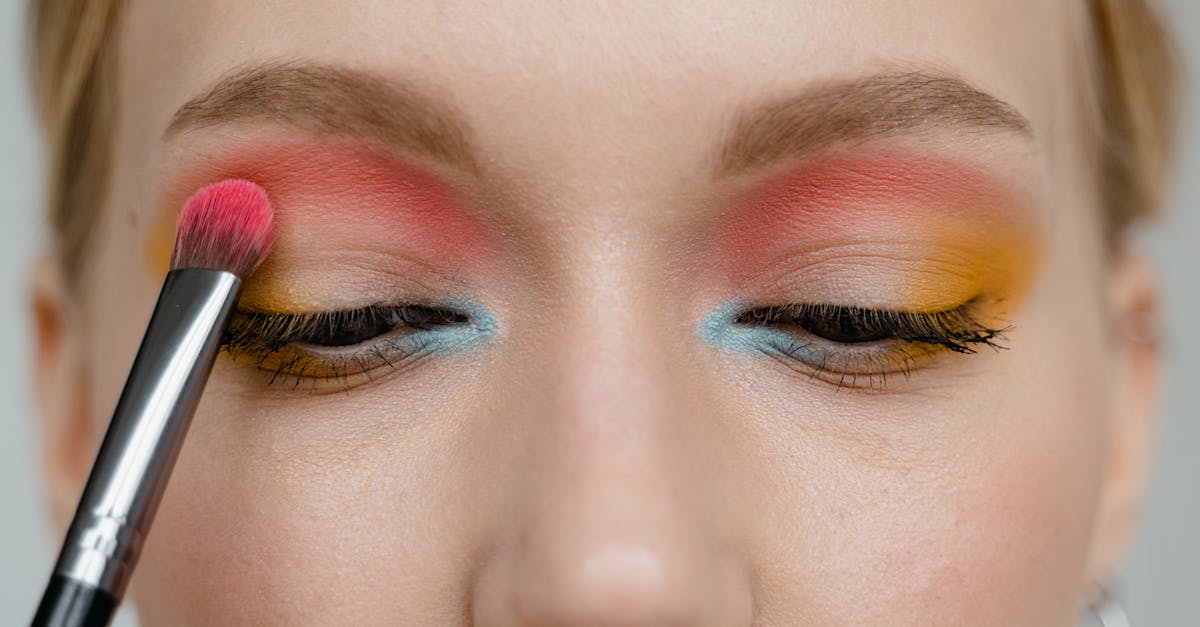
Almond eyes are often described as the most versatile eye shape for makeup, and that’s accurate, but “versatile” doesn’t mean technique doesn’t matter. There are still placements and approaches that make almond eyes look their best specifically.
Identifying Almond Eyes
Key characteristics:
- Both inner and outer corners taper to a slight point
- Outer corner tilts slightly upward
- Center of the eye is widest
- Equal white space visible on either side of the iris, but little or no white below the iris
- Overall impression is balanced, symmetrical, and slightly elongated
Eyeshadow for Almond Eyes
The Classic Three-Zone Method Works Best Here
Almond eyes are well-suited to the standard light-mid-dark placement:
- Light/shimmer on the lid (mobile lid from lash line to crease)
- Neutral matte transition shade in the crease
- Deeper shade at the outer corner in a V or C shape
Because the natural shape already creates good structure, you don’t need to dramatically redirect placement the way you would for round or hooded eyes. The standard method looks polished and intentional.
Enhance the Natural Taper
To make the almond shape more pronounced:
- Apply your deepest shade primarily at the outer corner V, keeping it concentrated
- Blend slightly down onto the lower outer lash line to reinforce the tapered outer corner
- Keep the inner corner lighter, a pale shimmer or highlight opens the eye from that direction
For a More Open Look
If you want to make almond eyes appear wider:
- Apply shimmer across more of the lid surface rather than concentrating at the outer corner
- Use a lighter transition shade
- Add a small highlight at the inner corner
- Light or nude waterline liner
Liner for Almond Eyes
Almond eyes handle liner styles exceptionally well because the shape itself provides good structure.
Classic wing (cat eye): The outer taper of almond eyes creates a natural guide for wing placement. The upward angle of the outer corner makes the wing appear more dramatic and intentional. Extend the wing to follow the lower lash line angle outward.
Tight line: Filling in the upper waterline (tightlining) makes lashes look thicker and denser without changing the visible shape of the eye, great for natural-emphasis days.
Full surround liner (smoky): Almond eyes are one of the shapes that can carry full-surround dark liner without it appearing to shrink the eye too dramatically, because the natural elongation provides enough baseline openness.
Graphic liner: Cut crease liner, negative space designs, and colored liner all work well on almond eyes because the balanced shape provides a clean canvas.
Looks That Excel on Almond Eyes
| Look | Why It Works |
|---|---|
| Classic winged liner | Natural outer corner guides the wing |
| Smoky eye (any darkness) | Natural depth accommodates heavy shadow |
| Cut crease | Standard placement maps exactly to almond crease line |
| Colorful liner | Balanced shape shows the color without distortion |
| Monochromatic shadow | Symmetry makes tonal looks appear intentional |
What to Avoid
Nothing is truly off-limits for almond eyes, but a few things don’t maximize the shape:
- Very rounded, center-emphasis looks reduce the tapered quality that makes almond eyes distinctive
- Very flat liner with no lift at the outer edge shortens the natural elongation the eye has at rest
- Overly thick liner all the way around can minimize the natural light and openness at the inner corner
Related Guides
- Round Eyes Makeup Guide
- Downturned Eyes Makeup Guide
- How to Apply Eyeshadow for Beginners
- Eyeliner Tutorial: Every Type Explained
- Fox Eye and Siren Eye Tutorial
Advanced Techniques for Almond Eyes
The Double Wing
One technique that specifically enhances the tapered shape of almond eyes is the double wing, a thin upper liner wing combined with a corresponding lower liner flick. Because the outer corners already taper naturally, extending both the upper and lower liner outward in parallel creates a dramatic, lifted effect without fighting the eye’s natural line. The key is keeping the lower flick thin and precisely angled to match the upper wing.
Color Placement Variations
Halo eye on almond eyes: The halo look places light shimmer in the center of the lid surrounded by deeper shadow at both the inner and outer corners. On almond eyes, this creates a pronounced lens-like effect, slightly more dramatic than on other shapes because the tapering at both ends frames the central light precisely.
Elongated smoky eye: Push your darkest shadow past the outer corner by 3-4mm and slightly upward. This works especially well on almond eyes because the natural outer taper provides a baseline for the extension, the added length reads as intentional rather than messy.
Tools That Help
Blending brushes: A medium-sized fluffy blending brush (around 12-14mm diameter at the tip) is ideal for almond eyes. Too large and the blend extends beyond the eye area; too small and you lose the soft transition.
Precision liner brush: For the graphic looks that work well on almond eyes, a very thin liner brush (1-2mm width) gives you the control to draw geometric shapes and cutlines accurately.
Angled brush: For applying color precisely at the outer corner V, an angled brush allows you to pack the deepest shadow right into the crease angle before blending out.
Makeup Looks by Occasion
| Occasion | Best Approach |
|---|---|
| Everyday | Light shimmer lid, defined crease, no wing or small wing |
| Work | Tight line, neutral transition shade, light mascara |
| Evening | Full smoky or cut crease with strong outer V |
| Special occasion | Extended wing, graphic liner, or double wing |
| Natural | Cream shadow in neutral tone, fluffy mascara |
Common Mistakes to Avoid
Ignoring the outer taper: The most distinctive feature of almond eyes is the outer corner taper. Looks that treat the eye as symmetrical from center to both corners miss the opportunity to use the shape.
Placing shimmer only in the center: While this works for round eyes (to emphasize the center), center-only shimmer on almond eyes doesn’t capitalize on the elongated shape. Spread shimmer across more of the lid or shift it toward the outer zone.
Over-lining the inner corner: Heavy product at the inner corner closes off the natural openness of almond eyes. For maximum impact, keep the inner corner light and clean, a highlight shade or a very light shimmer rather than a dark liner or shadow.
Sources
- Makeup Artistry Techniques, Robert Jones (2018)
- American Academy of Ophthalmology, Eye anatomy terminology
- Bobbi Brown Makeup Manual (Hachette, 2008)
We evaluate beauty products and techniques independently. To learn more about our editorial standards, read our Editorial Policy.
Get weekly eye care & beauty tips
Guides from the Eyeshadow Looks Beauty Desk. No spam, ever.
Frequently Asked Questions
How do I know if I have almond-shaped eyes?
Almond eyes taper at both corners, the inner and outer corners are both pointed rather than rounded. The eye is wider in the center and narrows toward both ends, similar to the shape of an almond kernel. The outer corner typically turns slightly upward. Most of the iris is visible between the lids, but the white (sclera) is generally not visible below the iris when looking straight ahead.
Is almond eyes the 'ideal' eye shape for makeup?
Almond eyes are considered the reference shape in most makeup textbooks because they work with almost every technique, liner styles, shadow placements, and looks that were designed for other eye shapes often require modification for [hooded](/articles/hooded-eyes-eyeshadow), [monolid](/articles/monolid-eye-makeup), or [round eyes](/articles/round-eyes-makeup), but translate cleanly onto almond eyes. That said, every eye shape has techniques that maximize it specifically, and almond eyes have their own best practices.