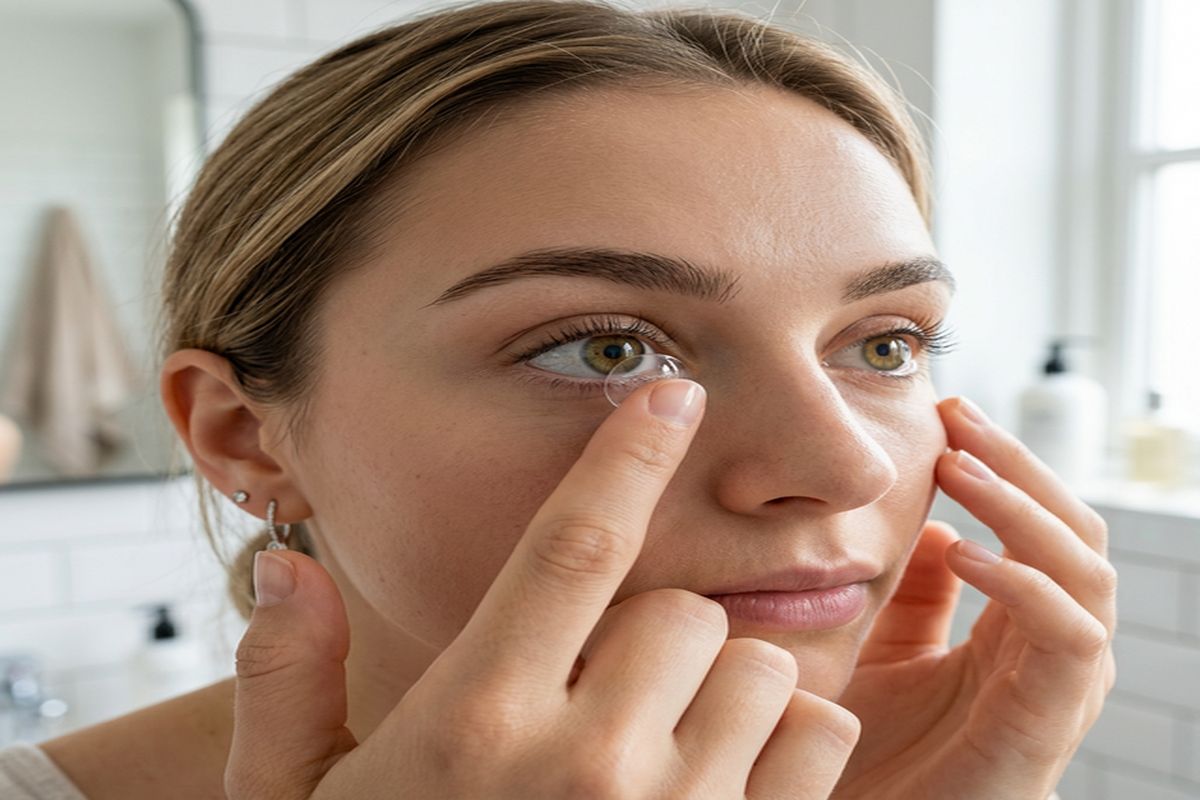
Contact lens wearers have all the eye makeup options that glasses wearers or unaided-vision people have, but the approach matters. The wrong technique or product can cause eye irritation, scratches on the cornea, or cloudy lenses by the end of the day. This guide covers exactly what to change and what to keep the same.
The Cardinal Rule: Contacts First, Makeup Second
Insert your contact lenses before applying any eye makeup. No exceptions.
The reason: makeup particles, from powder eyeshadow fallout, loose pigment, mascara fibers, and glitter, are consistently in the air around your face during application. If you apply lenses after makeup, you risk trapping particles between the lens and the cornea, which causes irritation and potentially scratches the corneal surface.
Inserting lenses first means they’re in place before any product is near your face. The risk window is eliminated.
Removal order is reversed: always remove lenses before cleansing away makeup at night.
Products to Avoid
Not all formulas carry the same risk. These are the highest-concern categories:
Fiber Mascaras and Lash-Extending Fiber Products
Fiber mascaras contain short synthetic fibers designed to adhere to lashes and extend their length. These fibers regularly dislodge with blinking, especially during application. Once airborne near an open eye, they can land on or under the lens, causing significant discomfort and potential corneal abrasion.
Avoid: any mascara labeled “fiber-extending,” “natural fibers,” or “lash fibers.”
Loose Glitter and Pressed Glitter Shadow
Cosmetic glitter (particularly poly film or polyester glitter) particles are angular and hard. If they migrate under a lens, they can scratch the cornea. Cosmetic-grade glitter (finer and more uniform) is safer than craft glitter, but still poses risk near lenses.
Use with caution: pressed shimmer eyeshadows are much lower risk than loose glitter. If you love sparkle, baked or pressed shimmer formulas that don’t shed are the safest route.
Kohl and Kajal Eyeliner (Waterline Applications)
Applying liner inside the waterline (tightlining) deposits product directly on the lacrimal margin, where tears contact the eye. This area is especially prone to migration onto the lens and into the tear film. Kohl in particular has been shown in ophthalmology literature to migrate into the anterior chamber of the eye more readily than other liners.
Skip: waterline liner when wearing contacts. Apply liner only on the outer lash line.
Oily Eye Creams Before Application
Eye creams with heavy silicone or oil bases applied immediately before inserting lenses can transfer residue to lens surfaces during insertion, clouding the lens. If you use an eye cream, apply it and allow it to fully absorb (10-15 minutes) before inserting lenses.
Products That Work Well
Tube Mascaras
Tube mascaras form a polymer tube around each lash rather than coating them with film-based pigments. The result: minimal flaking, no crumbling, and no fiber-shedding. They also remove cleanly with warm water without smearing.
Why it matters for lens wearers: standard mascaras are one of the leading causes of debris under contacts. Tube mascaras essentially eliminate this problem.
Waterproof Liquid Eyeliner
Waterproof liquid and felt-tip liner formulas dry to a flexible film that doesn’t smudge or flake. For contact lens wearers, this means less migration through the day and fewer particles finding their way to the lens surface.
Cream Eyeshadow (Over Powder)
Cream and gel eyeshadow formulas don’t produce the same microparticle cloud that powder eyeshadow does during application. If you’re concerned about fallout, cream formulas applied with fingers or a synthetic brush reduce the amount of product airborne during application.
Application Tips for Lens Wearers
Apply eye shadow before liner and mascara: this order applies particularly well to lens wearers, any fallout from eyeshadow can be cleaned up before precision liner and mascara go on, keeping the area around the lash line clean when you’re closest to the lens.
Avoid the inner waterline: keep liner strictly to the outer lash line. If you want the eye-opening effect of waterline liner without the product-on-lens risk, a nude or white outer waterline liner (lower outer edge, not inner) achieves a similar effect with lower risk.
Blink before checking work: after applying mascara, blink several times and check in the mirror. Any loose fibers will have fallen by the first few blinks, remove them before proceeding, not after your look is complete.
Use a clean spoolie to de-clump before blinks: running a clean spoolie through fresh mascara immediately after application removes any over-applied product before it has a chance to flake onto the lens.
Makeup Removal for Contact Lens Wearers
Remove lenses first, then cleanse makeup. Removing makeup with lenses in introduces makeup solvents to the lens surface and risks trapping dissolved pigment under the lens during removal motions.
Removal Products
Micellar water: effective for most everyday makeup. Apply to a cotton pad and press gently against closed eyes before swiping, pressing first dissolves product before mechanical action, reducing the rubbing needed.
Oil-based cleanser or dedicated eye makeup remover: required for waterproof formulas. Apply to a cotton round, hold against the closed eye for 10 seconds, then wipe gently. The soaking time does the work, not the pressure.
Avoid rubbing: repeated rubbing motion around the eye (even with lenses out) is associated with keratoconus progression in people predisposed to the condition. Press, hold, and wipe, don’t scrub.
Daily Hygiene Habits That Matter
Replace lenses according to schedule. Daily disposable lenses eliminate the cumulative buildup of makeup residue, protein deposits, and contamination that multi-week lenses accumulate. If you wear makeup daily, daily disposables create a clean slate each morning.
Replace your mascara every 3 months. This applies to everyone, but especially lens wearers, open mascara tubes accumulate bacteria, and any bacterial transfer to the eye is a higher-stakes concern when you have a lens on your cornea.
Wash hands before inserting or removing lenses. This particularly applies after applying any makeup, even if you believe you’re careful.
When to Remove Lenses During the Day
If you experience any of the following mid-day, remove your lenses:
- Persistent itching or burning sensation that doesn’t resolve in 2-3 minutes
- Blurred vision that doesn’t clear after blinking
- Visible debris on the lens (seen when you remove it)
- Redness that develops during the day
These are signs of lens contamination or irritation, not something to push through. Remove the lens, rinse it (or discard and use a fresh daily), and reassess. If irritation persists after lens removal, or if you see a scratch or mark on your cornea in the mirror, contact an eye care professional.
Sources
- American Academy of Ophthalmology, “Eye Makeup and Contact Lens Safety” patient guidelines (2024)
- Contact Lens Institute, “Safe Habits for Contact Lens Wearers” (2023)
- Stapleton, F. et al. “Contact Lens-related Corneal Ulcer.” Eye, 2012, risk factors including cosmetic contamination
- Doughty, M.J. “Eyelid margin and meibomian gland function in contact lens wearers.” Ophthalmic and Physiological Optics, 2011
Related Articles
- Smokey Eye Tutorial for Beginners
- Eyeshadow Blending Techniques
- Best Eyeshadow Palettes
- How to Make Eyes Look Bigger
- Eyebrow Shaping Guide
We evaluate beauty products and techniques independently. To learn more about our editorial standards, read our Editorial Policy.
Get weekly eye care & beauty tips
Guides from the Eyeshadow Looks Beauty Desk. No spam, ever.
Frequently Asked Questions
Should you put contacts in before or after eye makeup?
Always insert contact lenses before applying eye makeup. This prevents microscopic makeup particles from transferring onto the lens surface and reduces contamination risk. After applying contacts, you can apply all eye makeup as normal.
What mascara is safe for contact lens wearers?
Fiber mascaras and lash-extending mascaras with loose fibers are the highest risk for contact lens wearers, the fibers can dislodge and land on or under the lens. Tube mascaras (which form a polymer tube around each lash) are the safest choice: the film stays intact and rinses off cleanly without micro-flakes.
Can you wear eyeliner with contact lenses?
Yes, with specific precautions. Avoid applying liner on the inner waterline (between the lash line and eyeball), this deposits product directly adjacent to the cornea and contact lens. Keep liner to the outer lash line only. Gel and waterproof liquid liner are better choices than pencil liners, which shed more fine particles.